Penmachine
23 March 2010
Another party movie
Reilly made a movie of the party we went to on the weekend:
You might recall another one of his videos I posted a couple of weeks ago.
Labels: birth, friends, geekery, movie, party, photography, vancouver, video
07 March 2010
Get the T.A.M.I. Show on DVD
Any musician or music geek worth his or her salt knows about The T.A.M.I. Show, a one-off 1964 TV special/theatrical movie. It capitalized on that year's Beatlemania with an astonishing evening of concert performances by hitmakers from the U.S. and the U.K. in Santa Monica near the end of October of that year:
The film is now available for purchase for the first time (yes, the first time in 46 years). Like The Beatles' Yellow Submarine, The T.A.M.I. Show has been mired in copyright and ownership disputes for decades—bootlegs have abounded, but even those lacked footage of The Beach Boys, who had their part removed after the initial theatrical release in '64.
The T.A.M.I. Show is best known for the explosive performance (and amazing hairdo) of James Brown, then nearing the peak of his powers as a singer, dancer, bandleader, and musical innovator. (He would basically invent funk the next year, with "Papa's Got a Brand New Bag.") If you were among those who thought The Beatles were strange and radical in 1964, then this footage of James Brown and the Famous Flames would have simply exploded your head.
But check out the rest of the lineup too: The Barbarians, Marvin Gaye, Gerry and The Pacemakers, Lesley Gore, Jan and Dean (who hosted), The Supremes, Billy J. Kramer and The Dakotas, and Smokey Robinson and The Miracles. Plus a few other acts you might have heard of: Chuck Berry, The Beach Boys, and The Rolling Stones. All on one concert stage.
It's a shame the movie has been essentially underground since before I was born, but now it will be easy to find starting March 23. I made sure to pre-order a copy, and I'd like to thank Tim Bray for telling me it was showing on PBS tonight. I've been trying to see the whole thing since the 1980s.
Labels: film, movie, music, sixties, television
06 March 2010
Movie from still frames
Our friends Miranda and Reilly had going-away party last night for Tanya, who's moving to Calgary with her fiancé Barry. Reilly made a video:
Interestingly, he used a digital still camera. Not even the movie mode on a still camera, but the super-high-speed burst shooting mode of his top-of-the-line Canon EOS-1D Mark IV digital SLR, which can fire away at up to 10 frames per second. (Miranda and Reilly are the kind of people who are supposed to have expensive cameras. They're wedding photographers, and very good ones.)
The final video, compiled from over 5000 individual photographs, is arty, and a bit strange. My wife Air and I are in it, mostly in the background, but we're featured about four and a half minutes in, just as we were leaving. I'm Mr. Handshaking-Guy-in-a-Hat.
Labels: friends, geekery, movie, party, photography, vancouver, video
21 January 2010
Review: "It Might Get Loud"
If you're a guitar or rock music nerd (like me), you need to see It Might Get Loud. My friend Andrew recommended it to me a few weeks ago, and I was reminded about it on the 37signals blog. The film is a documentary featuring Jimmy Page (of Led Zeppelin), The Edge (of U2), and Jack White (of The White Stripes and The Raconteurs), talking about how they came to be guitarists, playing individually, and jamming together on a faux–sitting-room set built in a warehouse.
So if you're a guitar nerd, you might be off to buy the DVD right now. Still, it's worth knowing why this is not just some self-indulgent guitar wank-fest, and why it's also worthwhile for general music fans too.
No doubt Page, Edge, and White are three of the most influential and popular electric guitarists of the past 40 or 50 years. It would have been interesting to add, say, Tom Morello or Eddie Van Halen to the mix, but I think director Davis Guggenheim was wise to structure the film around a tripod of players—Page from the '60s and '70s, Edge from the '80s and '90s, and White from this past decade.
Each of them talks about individual songs that helped propel them to their current careers. Jimmy Page, resplendent in a long coat and silver hair just the right length for an elder statesman of rock 'n' roll, listens to Link Wray's "Rumble" crackle from a 45 rpm single—he jams along on air guitar and also turns a phantom tremolo knob on an invisible amp to demonstrate how Wray took that classic instrumental to a new level, and grins in sheer joy as he must have as a teenager.
The Edge recalls watching The Jam blast away the twee pop and bland '70s rock that dominated Top of the Pops on British TV in his youth. Jack White puts Son House's skeletal "Grinnin' in Your Face" (just vocals and off-time handclaps) on the turntable and says it's been his favourite song since he first heard it as a kid.
And that's the funny thing. White, who's 34, turned five years old in 1980, the year Led Zeppelin disbanded and U2 released their first album, Boy. For most guitarists of his generation, walking into a room with your guitar to meet Jimmy Page and The Edge would be terrifying, especially when they asked you to teach them one or two of your songs. But in some ways White comes across as the oldest of the group, a pasty-faced ghost from the 1950s or earlier, wrestling with his ravaged and literally thrift-store Kay guitar, wearing a bowtie and a hat and smoking stubby cigars, channeling Blind Willie McTell and Elmore James, building a slide guitar out of some planks, a Coke bottle, and a metal string, assembled with hammer and nails:
While Page and The Edge both grew up in the British Isles, and have never held any jobs besides playing guitar, White is from Detroit, and his hip-hop and house-music–listening cohorts in the '80s and early '90s thought that playing an instrument of any kind was embarrassing, so he didn't come to guitar until he'd already worked as an upholsterer. Somehow, though, if White and Page are rooted in gutbucket, distorted blues, it's still The Edge who seems to be coming from outer space. When he plays his echoing, beautiful intro to "Bad" alone on the soundstage, it's a sound neither of the other players could have created.
During the guitar summit, each of the guitarists teaches the others a couple of his songs. The Edge's first one is "I Will Follow," and it works better than any of the rest, in part because, as he explains, he often creates guitar parts with the absolute minimum of notes, so that they sound clearer, more distinctive, and less muddy when played really loud. And Page and White play really loud. Together the result is, as Jimmy Page says, "roaring."
Labels: band, film, guitar, movie, music, review
17 January 2010
Considering "Avatar"
I'm still not sure quite what I think—on balance—about Avatar, which my wife and I saw last week. In one respect, it's one of very few movies (pretty much all of them fantasy or science fiction) that show you things you've never seen before, and which will inevitably change what other movies look like. It's in the company of The Wizard of Oz, Forbidden Planet, 2001: A Space Odyssey, Star Wars, Blade Runner, Tron, Zelig, Who Framed Roger Rabbit?, Jurassic Park, Babe, Toy Story, The Matrix, and the Lord of the Rings films. It's tremendously entertaining. Anyone who likes seeing movies on a big screen should watch it.
I also don't know if anyone is better at choreographing massive action sequences than Avatar's director, James Cameron—nor of making a three-hour film seem not nearly that long. Maybe, with its massive success, we'll finally see fewer movies with the distinctive cold blue tint and leathery CGI monsters stolen from the Lord of the Rings trilogy. (Maybe in a few years we'll all be tired of lush, phosphorescent Pandora-style forests instead.) Avatar is also the first truly effective use of 3D I've seen in a film: it's not a distraction, not a gimmick, and not overemphasized. It's just part of how the movie was made, and you don't have to think about it, for once.
But a couple of skits on last night's Saturday Night Live, including "James Cameron's Laser Cats 5," in which both James Cameron and Sigourney Weaver appeared, reminded me of some of Avatar's problems:
- Cameron has been thinking about this project since the beginning of his career over three decades ago, and it shows. Or rather, it shows in every other movie he's made. That's because Avatar includes a grab-bag of common Cameron concepts: humanoids that aren't quite what they seem (The Terminator and Terminator 2); kick-ass interstellar marines—including a butch-but-sensitive Latino woman—piloting big walking and flying machines (Aliens); state-of-the-art CGI effects pushed to their limits (The Abyss, Terminator 2, and Titanic); money-grubbing corporate/elite bad guys (Aliens, Titanic), hovering, angular, futuristic transport vehicles (True Lies, The Terminator, The Abyss, Aliens); a love story that turns one of its participants away from societal conventions (Titanic); people traveling to distant planets in suspended animation (Aliens), and of course a lot of stuff that Blows Up Real Good.
- The storyline, despite its excellent execution, is remarkably simplistic, and could easily have been adapted from a mid-tier Disney animation like The Aristocats or Mulan, or (most pointedly) Pocahontas. It's the Noble Savage rendered in blue alien flesh. No doubt much of that is intentional, since some of our most powerful and lasting stories are simple. But I think all the talent and technology behind this movie could have served something more sophisticated, or at least more morally nuanced.
- With all the spectacle of Pandora—the glowing forest plants, the bizarre pulsing and spinning animal life, the floating mountains, the lethal multi-limbed predators—somehow it didn't feel alien enough to me. The most jarring foreign feeling came in the views of Pandora's sky, reminding us that it is not a planet but one of many moons of a looming, ominous gas giant like Jupiter. The humanoid Na'vi, despite all the motion capture that went into translating human actors' performances into new bodies, still seem, in a way, like very, very well-executed rubber suits. The pre-CGI aliens of Aliens (especially the alien queen) were, to me, more convincing despite often actually being people in suits.
- Overall, Avatar isn't James Cameron's best film. I'd choose either Aliens or Terminator 2: Judgment Day as superior. I remember each one leaving me almost speechless. That's because they were exhilarating and—more important—profoundly satisfying, both emotionally and intellectually. Avatar, despite its many riches, didn't satisfy me the same way.
_-_Alien_queen.jpg)
Now, if you're among the 3% of people who haven't seen Avatar yet, I still recommend you do, in a big-screen theatre, in 3D if you can. Like several of the other technically and visually revolutionary movies I listed in my first paragraph (Star Wars and Tron come to mind), its flaws wash away as you watch, consumed and overwhelmed by its imaginary world.
James Cameron apparently plans to make two Avatar sequels. Normally that might dismay me, but his track record of improving upon the original films in a series, whether someone else's or his own (see my last bullet point above), tells me he might be able to pull off something amazing there. Now that he has established Pandora as a place, and had time to develop his new filmmaking techniques, it could be very interesting to see what he does with them next.
Labels: film, movie, review, sciencefiction, space
14 August 2009
Cooking with pearls
 My wife and daughters went with my mom to see Julie and Julia the other day, and my older daughter M was inspired. Seeing the efforts of an inexperienced blogger cooking up the famous recipes of Julia Child, M has decided to put her mind to cooking, which she hasn't done much of yet. (She's eleven.)
You can follow her progress on her blog. Her first step was simple, a poached egg, and she's since moved on to chopping onions and more. When my wife, a teacher, returns to work in a few weeks, M and I plan to work on dinner together each night. Since I'm not much of a cook either, I'm sure we'll both learn something. Will we ever get to beef bourguignon? I doubt it, but you never know.
14 July 2009
Links of interest 2006-07-05 to 2006-07-13
Yup, still on a blog break. So, more of my selected Twitter posts, newest first:
- Vancouver to Whistler in one minute (okay, I cheated):
- We're in the mountains, but in a civilized way. Pool/hot tub, grocery store across the street, Wi-Fi. But, uh, there is mountain weather.
- Super-duper stop-motion movie with 60,000 photo prints (ad for Olympus, via Lisa Bettany and Photojojo). Chris Atherton points out that this follows Wolf and Pig.
- Okay camera nerds, here's some rangefinder pr0n for you.
- The stereotypically blingtastic (and boobtastic) video diminishes Karl Wolf's tolerable version of Toto's "Africa." (And I'm no Toto fan.) It's like a live-action Hot Chicks with Douchebags. Yes, the choirboy harmonies are actually kind of charming, but he's going P-Diddy on it in the end.
- In the storage closet, my kids found something of mine from 1976 that is EVEN GEEKIER than my U.S.S. Enterprise belt buckle:
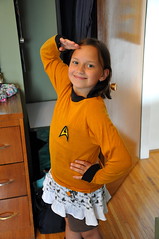
Red shirts were available back then, as well as the blue Mr. Spock style, but I chose Kirk. Of course. - The only sounds I can hear right now: the dishwasher, the fan in the hallway, and the birds in the trees outside the window.
- During my biology degree, Platyhelminthes was a favourite organism name. Now there's a plush toy! (With 2 heads!!)
- When I used to busk with the band, our biggest victories were scaring away the holy rollers across the street (we got applause).
- Neat. When a ship is built, here are the differences between milestones: keel laying, christening, commissioning, etc.
- AutoTune the News #6. Even more awesome.
- Picked up kids from Aldergrove camp. Sadly, there was a terrible accident on the Port Mann Bridge. We took a long Langley/Surrey/New Westminster detour.
- Google's changing culture. Point: Google now has more employees than Microsoft did at launch of Windows 95.
- Time lapse: 8 hours from my front window in about 1 min 30 sec, made with my new Nikon D90 and free Sofortbild capture software (and iMovie):
Something like John Biehler's Nikon Coolpix P6000 is better for timelapse long term; the D90's mechanical shutter, which is rated for 100,000 uses, would wear out in less than 6 months if used for time lapse every day. P.S. Andy Gagliano pointed to a useful Macworld podcast about making time-lapse movies. - Depressing: most Internet Explorer 6 users use it at work, because they're not allowed to use another browser.
- These Christopher Walken impressions are way funnier than I expected.
- The way monkeys peel a banana shows us we've all been doing it the needlessly hard way all these years.
- Um... hot!
- Most appropriate Flash cartoon ever?
- Drinking whisky and Diet Dr. Pepper, watching MythBusters. Pretty mellow.
- A good photo is "not about the details or the subject. It's what your subconscious pulls out of it all without thinking."
- Just picked up another month's supply of horrible, nasty, vile, wonderful, beautiful, lifesaving anti-cancer pills. Thanks, Big Pharma Man.
- My wife tells me she's discovered a sure-fire tip for a gal to attract quality guys in public: carry a huge SLR camera over your shoulder.
- "For the great majority [...] blogging is a social activity, not an aspiration to mass-media stardom."
- Just talked to younger daughter (9) for first time after three days at summer camp. She's a little homesick, but having fun.
- I took a flight over a remote landscape:
- The 50 worst cars of all time (e.g. "The Yugo had the distinct feeling of something assembled at gunpoint").
- I haven't seen either Transformers movie, but that's okay, I saw this.
- Dan Savage: cheating on your spouse should now be known as "hiking the Appalachian Trail." Good point in the article too.
- You can still buy a station wagon with fake wood paneling!
- Train vs. tornado. It does not end well. Watch without fast-forward/scrubbing for maximum tension.
- Just lucked into a parking spot on Granville Island. Time for some lunch.
- Sent the kids off for a week of horse-riding camp today. Wife Air and I had sparkling wine in the garden. Vewwy vewwy quiet around here.
- Just sorted a bunch of CDs. Still several discs missing cases, and cases missing discs. I feel like a total '90s throwback.
- Rules of photography (via Alastair Bird).
- When did the standard Booth Babe uniform become cropped T-shirt and too-short schoolgirl kilt?
- Listening to "Kind of Blue." It's been awhile.
- "A two-year old is kind of like having a blender, but you don't have a top for it." - Jerry Seinfeld (via Ryan).
Labels: audio, biology, blog, cancer, chemotherapy, family, flickr, geekery, google, microsoft, movie, music, oceans, photography, sex, startrek, transportation, video, whistler
05 July 2009
Links of interest 2006-06-28 to 2006-07-04
Once again, while I'm on my blog break, my edited Twitter posts from the past week, newest first:
- Photo of Obama picking up his infamous housefly victim.
- Guess that U2 iPod is never coming back.
- And now: "Ant and Buttercup," my debut HD macro closeup movie from our summer garden:
- My first experiments with off-camera flash during close-up photography:


- If I'm passed at high speed by someone with a Washington plate BOKEH, I now know who it is. He says he'll wave.
- Mammals will play, even between species, even when you'd never expect it—wild polar bear and huskies (slide show via Dave Winer).
- A couple of crows are nesting nearby; they keep landing in our birdbath and on the house and lamp stands, looking ominous. Too smart, crows.
- Sitting in a B.C. garden
No waiting for the sun - CompuServe finally shuts down.
- Just in case you're looking for a $2.1 million convertible.
- Congratulations to Buzz Bishop, Jen, and Zacharie.
- I presume this tiny USB-driven monitor screen is Windows-only, because of drivers? Looks pretty swell. (Via Neal Campbell.)
- Definitive proof I'm not afraid of heights: I love this idea.
- Via John Biehler, I found that as well as MythBuster Adam Savage, his co-workers Grant Imahara and narrator Robert Lee are also on Twitter.
- When I had my first Nikon 25 years ago, I wouldn't have believed I'd ever own one (a D90) with 66 pages of the manual (out of a couple hundred total, in a 16 MB PDF file) just for menu options. Then again, 25 years ago, a friend showed me a shoulder-mounted Betamax camera from Hong Kong, and it was the latest in high tech video too.
- That's the funkiest beat I've ever heard a marching band play (via Jared Spool). Maybe some James Brown next?
- Has anyone pinpointed the exact day that Victoria Beckham stopped being able to smile? Angus Wilson speculates, "whatever day she began to look less like a hot English babe and more like a velociraptor."
- Meg Fowler: "Sarah Palin's quitting politics like Ann Coulter's quitting evil."
- As the 40th anniversary of the first moon landing approaches, some fabulous photos from the missions, via Bad Astronomy.
- From Ben Englert: "Thank you, gdgt, for institutionalizing the arduous task of dick-measuring by figuring out who has more toys."
- Ten best uses of classical music in classic cartoons.
- Our fridge magnet: "I love not camping."
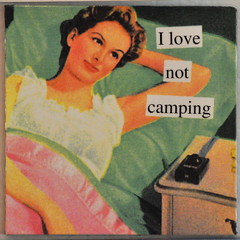
- How did I manage to bite the inside of my upper lip while eating a peach? If this were high school, the guys would say, "Each much?"
- Back to short hair for summer. And now I realize that it's Colbert hair.
- I think my guts have calmed down now. Time for bed. In the meantime, enjoy a naked Air New Zealand flight crew.
- In case you'd like to watch Jeff Goldblum reporting on his own "death," on Colbert Monday: links for Canada and the U.S.A. (sorry if you're elsewhere!).
- Didn't attend various Canada Day parties because of tired family and my usual intestinal side effects. Hope you had fun in my stead. Managed to avoid intestinal chemo side effects for a few days, but they're back with a vengeance. Could be a looooong night. (And it was. At 2 a.m., my chemo side effects were "over" and I went to bed. Bzzt! Wrong! Finally got to sleep at 9 a.m., woke up at 1 the next afternoon. As Alfred E. Neuman says, Yecch.)
- Whatever you think of the 2010 Olympics here in Vancouver, VANOC is doing a good job with graphic design.
- I, too, welcome our new ant overlords.
- I had no alcohol on my birthday yesterday, but still had a Canada Day headache on July 1. Here's my new free instrumental.
- Inside Home Recording #72 is out: Winners, Studio Move, Synth 101, Suckage! AAC enhanced and MP3 audio-only versions.
- Normally I really like our car dealer's service dept, but today the steering wheel came back oh-so-slightly to the left. They had to re-fix it.
- World's geekiest pillows (via Chris Pirillo). My guess: they didn't license the Apple icons. Get the pillows while you can.
- Officially made it to 40. Thanks everybody for the birthday wishes. Most people are bit melancholy to reach 40, but I am extremely glad to have made it.
- Just returned from a Deluxe Chuck Wagon burger (with cheese) at the resurrected Wally's Burgers in Cates Park, North Vancouver:

- From Rob Cottingham: "The hell with putting a ring on it. If you liked it, you shoulda made a secure offsite backup."
- Info about recording old vinyl records into a computer: You need a proper grounded phono preamp, with good hot signals into an audio interface or other analog-to-digital converter. A new needle might be wise if yours is old, but the real phono preamp (w/RIAA curve) is the most necessary bit after that. Route it thru an old stereo tuner if needed! See my old post from 2006 at Inside Home Recording.
- Myth confirmed: Baby girl evidence (named Stella) shows MythBusters' Kari Byron actually was pregnant.
- My new Twitter background image is the view we saw at sunset during my birthday party on Saturday. (I've since replaced it again.)
- Back from another fun sunny summer BBQ at Paul Garay's new house—it's been a burgers-n-beer weekend.
- Photos from my 40th birthday party now posted (please use tag "penmachinebirthday" if you post some).
Labels: animals, band, birthday, cartoon, family, food, geekery, insidehomerecording, linksofinterest, moon, movie, music, mythbusters, news, paulgaray, photography, politics, space, transportation, usb
06 June 2009
Han Solo, P.I.
I would have loved this show about 30 years ago:
Via All Things D.
Labels: humour, memories, movie, space, starwars, television
09 May 2009
Redeeming the prequel
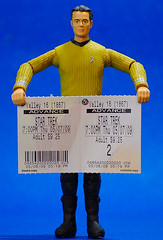 Remember back in 2006 when I raved about the then-new Casino Royale? It defined how to reboot a movie franchise. And the new Star Trek, which I saw tonight, learned that James Bond lesson, in spades.
Trek never shied away from time travel—the old crew used it to do everything from keeping the Nazis from winning the War to saving the whales (and the Earth). But the new movie is especially clever with it, managing to maintain the integrity of the original series and movies, and all their sequels, while giving the "new" crew entirely different directions to go.
In another way, that hardly matters. My kids enjoyed the movie tremendously, even though they know basically nothing about previous Treks. It's just a great big ball of fun. Despite all the praise it's received, it was also still considerably better than I expected.
But that was Winona Ryder? Didn't even recognize her.
Labels: film, movie, review, startrek
13 April 2009
My song "Meltdown Man" in a movie trailer
If you watch this trailer for the documentary film Paper or Plastic?, around the 1 min 35 sec mark, you'll hear my tune "Meltdown Man," which the filmmakers licensed from me last year:
The movie about the world grocery bagging championships. Yes, you read that right. I haven't seen the whole film yet, but it looks fun.
Labels: film, free, movie, music, penmachinepodcast
16 March 2009
A little walk
This is my kids' walk to school—and since I attended the same school in the '70s, it's also the same walk I took each day 30 years ago:
Compiled from 47 photos taken with my Nikon D50 every 15 to 20 steps on the way, and made with iMovie '09. Music is my tune "Camp Walk," from 2006.
Labels: family, memories, movie, nikon, penmachinepodcast, school
06 January 2009
Geeky film lists
I've never heard of Den of Geek before, but they make some fun lists (via Kottke), such as these about movies:
- Top 50 movie special effects shots (Jason Kottle wonders if Titanic should have something in this list, but it gets into the next one)
- 24 worst special effects of all time
- Top 50 drug trips in movies
- 10 most depressing movie endings ever
- To 10 mindf**k movies
- 10 inappropriately bad acting performances
- 10 inappropriately good acting performances
...and, my favourite, just for the title:
- Top 10 exploding people—and no, while it's on there, Scanners is not #1!
Labels: film, geekery, lists, movie, web
21 December 2008
Science is amazing
Okay, so here's a movie (via Bad Astronomer) of Jupiter's moon Ganymede passing behind the giant planet. Pretty darn amazing and cool:
Now here's the really amazing part. The movie was assembled from a series of images taken not from a probe sent to Jupiter from Earth. Nope, they were taken by the Hubble Space Telescope, in low orbit around our own planet. These pictures were taken, over the course of two hours in April 2007, from here, something like 600 million kilometres away from the subjects. The light from Ganymede and Jupiter took almost an hour to reach the Hubble camera.
Talk about your telephoto lens.
Labels: astronomy, movie, photography, science, space, video
19 December 2008
Violence and sex
When you think about it a little, the two major things we prevent our children from seeing, sex and violence, are pretty weird. Not in themselves individually, but on how we fixate on them as a yin-yang pair. What's even weirder is that we treat sex (which, of the two, is certainly the good one) as the worst—even for adults.
Consider: When the great photographic website The Big Picture has a year-end picture retrospective, it warns us about violent images but still lets us see them, but doesn't include any sexual pictures at all, even though I'm sure 2008 included some amazing ones. And your local video rental store puts the porn in a hidden back room, but leaves the horror movies out on the public shelves.
I think I know why.
What I mean is, while we generally protect our kids from seeing extreme violence and gore, whether real or simulated, they still get exposed to a lot of lower-level stuff. Even for rather young children, everything from Mario pounding enemy characters with a hammer in videogames, to Bugs Bunny and Batman cartoons, to TV shows like Destroyed in Seconds (a guilty pleasure both for me and for my ten-year-old daughter) is fair game. As they get older, we're pretty much fine with letting them play more graphic games, watch CSI and Indiana Jones, and see shows where stuff (and people) get blowed up real good.
But apparently we're not going to let them see any sex. Nudity and sexuality are going to get a PG-13 or R or NC-17 from the ratings board a lot more easily than violence. And when was the last time a violent movie received an X rating? Surely any suggestion of sexuality between kids' videogame or TV characters would probably lead to a recall or cancellation—yet it's fine if they punch each other. The key example here? The infamous "hot coffee mod."
Here's my theory. For most people in developed western societies, any violence beyond accidents or schoolyard fisticuffs is pure fantasy. Unless you're a solider or maybe a gang member, or just perhaps a police officer in an extreme and unusual situation, chances are you will never kill or maim anyone on purpose in your entire life. You will never break someone's neck in hand-to-hand combat. You will never blow up a building or shoot down a plane. You will never aim a machine gun or a rocket launcher, or wield a sword in anger. You absolutely will not ever vaporize a planet.
And that's a good thing.
But nearly everyone, once they become adults, eventually has sex. Maybe a lot of it.
And that's also a good thing, or should be.
Children who see violence, especially exaggerated violence of the Donkey Kong or blowed-up-real-good variety, are seeing something they can fantasize about, but which they will never do. Children who see sex are seeing something they will almost certainly do eventually.
And that's why we adults think of sex as more dangerous for our kids. It's why we shield them from it for longer. It's why when we do discuss it at first, we have Serious Talks about the Human Reproductive System. And why we don't have Serious Talks about High Explosives.
Because sex is real, and important, and as we become adolescents we're wired by evolution to want it way more than we want to blow stuff up. So children need to learn about sex as a real thing, so they can make wise decisions when they get there. (How many of us, conversely, ever need to make any sort of decision about, say, wearing ear protection when firing a mortar in battle?)
I'm sure some sociologist has considered this already. However much the dichotomy between sex and violence makes sense, however, it's still pretty weird.
Don't even get me started on swearing.
Labels: biology, controversy, evolution, movie, psychology, sex, tv, videogames, violence
15 November 2008
Still a sexy beast, if a little addled
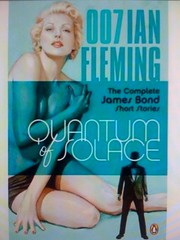 The iconic James Bond "shoot at the camera" montage doesn't appear until the end of Quantum of Solace, and that's a good summation of the whole movie: it's fun, but things aren't quite in the right place. In fact, by the time it's over, it seems a bit like a Bond movie trailer that lasts almost two hours.
A couple of years ago I raved about Casino Royale, Daniel Craig's first Bond appearance. Quantum isn't as good. It strays too far into Jason Bourne land, where the fights are all dizzying intercuts, the scenes flit around the world almost randomly (Italy, Britain, Haiti, Austria, Bolivia, Russia...), and the various secondary players are so corrupt that there's nearly no one left to root for. There's something emotional missing, and by the time it's over you wonder a little what most of the movie had to do with Bond's end goal.
I'm not saying I didn't like the film. Craig remains extraordinary in the role, steely and taut. There's a lot of clever editing, implying what happens rather than showing it. The action scenes—including chases on foot, in boats, in cars, and on aircraft—spark with energy, even if they occasionally confuse. By the end, you know more about why Bond is who he is, and there's a nice little joke about Canadians, presumably by Canadian lead writer Paul Haggis. Overall, my wife and I enjoyed it.
But next time, the filmmakers need to go back to Casino Royale and figure out why that movie didn't just spark, but was refreshingly, blazingly on fire. They have a good thing going, but they've got to keep it going.
Labels: jamesbond, movie, review
16 October 2008
Links of interest (2008-10-16):
I'm still doped up on Tylenol 3's and pretty tired post-surgery, so am not up for much thinking or original posts. I'm also contemplating email bankrupcy again, mere months after my last one, as my inbox creeps up to 800 once more. Sigh. Anyway, here's some interesting stuff:
- What if all movies had cell phones? (There's a good reason No Country for Old Men was set in 1980, by the way.)
- A worthy quote in this electional season: "I like to pay taxes. With them I buy civilization." - Oliver Wendell Holmes (though it may be a folksier recasting of "Taxes are the price we pay for a civilized society").
- "Hey news executives! Try this newsroom pop quiz: Give each staff member a pencil and tell everyone to stop what they're doing and write out the tag that creates a hypertext link." (via Dan)
- Andrew Sullivan rounds up quotes from a number of last night's press and blogger reactions to the final McCain-Obama debate.
- Also from Sullivan, it's a bit sad how well this video reflects the approach of the McCain campaign right now.
- While Leica's upcoming S2 camera is quite large (especially the lenses) for a digital SLR, it has a medium-format size sensor, meaning that it is smaller and probably more ergonomic than most of its direct competitors, and that even the rumoured €10,000–20,000 price isn't as insane as it sounds. Nevertheless, the cost of a reasonably complete S2 system when it's released next year will rival that of a condominium. It also bodes well for future "lower end" (for Leica, at least) cameras from this legendary manufacturer.
- What's it like to write other people's term papers for a living? (via Kottke)
- The web comic Basic Instructions makes me laugh almost every single time a new one comes out.
- Vancouver locals Buzz Bishop and Darren Barefoot accurately summarize the Canadian election held this week, in which nothing much changed. The result (as I discussed earlier) bodes poorly for our country's environmental and climate policy, which is one subject we can't afford to waste time on, unfortunately.
Labels: environment, film, leica, linksofinterest, movie, news, photography, politics, school, telecommunications, web, writing
28 September 2008
The world's greatest machines
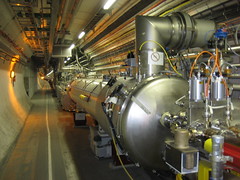 There's been a lot of talk recently about how the Large Hadron Collider (LHC) is the largest and most powerful machine ever built. I guess it is that. But there is another machine I still like better: the Apollo Saturn V moon rocket, retired more than 35 years ago. Each one was constructed not for years and years of experiments by thousands of people, as the LHC is, but for a single task lasting a mere week: to get three men to the moon and back.
The Saturn V was the most powerful machine of its time. I still think it is the most important device we've ever built, and as far as I know it remains the most expensive—in adjusted dollars, the Apollo program cost about $135 billion, many times the price of the LHC.
 I've just watched In the Shadow of the Moon again, this time on television. (It was worth seeing in the movie theatre before, for the size of the images.) I was less than three weeks old during the launch and the eventual landing of the Lunar Module. If I'd been an adult, I think I would have burst into tears at both events. I've come pretty close just watching the footage, almost 40 years later.
I'm very happy that people think basic physics important enough to spend billions of dollars constructing the LHC. But, while it is impressive, that device is an experimental apparatus, carefully assembled over many years. Although the Apollo rockets were also a massive endeavour, it happened instead in an astounding rush, a little over eight years from conception to success, less time than it takes for Peter Gabriel to make a new album. It remains the only time we've taken people to another world. That's some really awesome machinery.
Labels: astronomy, moon, movie, science, space
27 August 2008
"Edison and Leo" hits the screen
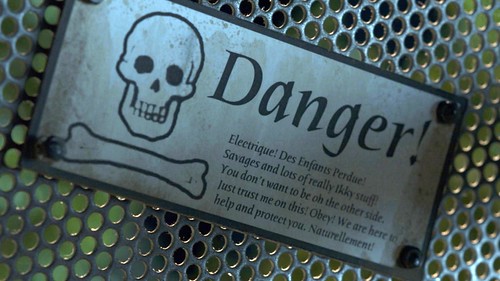
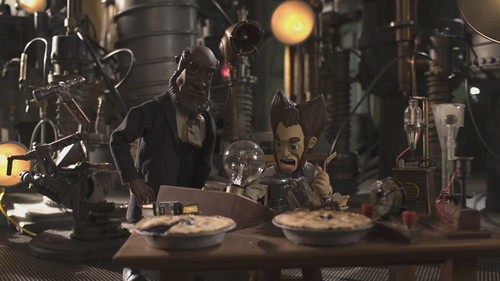
My friend Jeff is a movie publicist, and in January, he took me to visit the set of one of his projects: Edison and Leo, the first feature-length stop-motion animated movie ever made in Canada. At that time the film had already been shooting for eight months in a converted residential school in Mission, B.C., about an hour east of Vancouver, after several years of preproduction. Now, eight months after that, the film is ready.
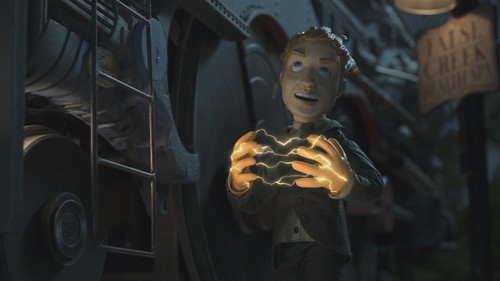
I haven't seen it yet, because Edison and Leo will premiere at the Toronto International Film Festival next week, on September 4.
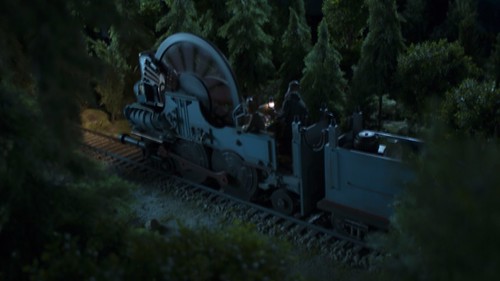
Just as I compared the impressive but bleak The Dark Knight to 1989's supposedly "dark" Tim Burton Batman, I suspect that Edison and Leo will better Burton's 1993 stop-motion production, The Nightmare Before Christmas, too.
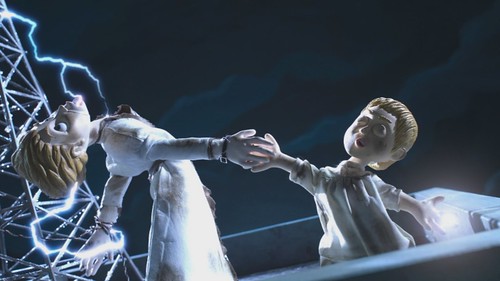
From what I know of it now and what I saw on the set, Edison and Leo shares elements with many scary elements of classic fairy tales: parental abandonment, evil meddlers, plotting siblings, strange castle compounds, and lightning bolts and electrocution. Okay, maybe that's more Dracula.
Not only is it the first stop-motion feature from Canada, it's also apparently the first such movie aimed at grownups anywhere. If it's as good as it seems it might be, there's always that Best Animated Film Oscar to shoot for as well.
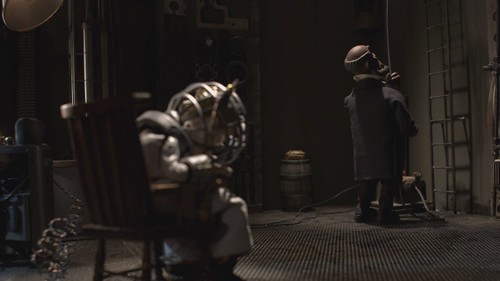
You can get an idea of the look of the film from my photoset at Flickr. I'm looking forward to a viewing.
Labels: animation, edisonandleo, film, movie
10 August 2008
When did dark become bleak?
Remember when the Michael Keaton Batman was considered "dark and edgy?" Today, I couldn't even write that without the ironic quotation marks, and without laughing, a bit like the Joker. Because The Dark Knight, that's dark.
These must be dark times, at least for some of us, because even the dark movies are darker. Or not that, really. They are dark, but also bleak. Look at No Country for Old Men, or some earlier films of the same ilk. Alien3 and Leaving Las Vegas come to mind. I left them as I left The Dark Knight, impressed but a bit deflated. I needed a recharge after each one. Which characters don't lose in those movies?
That's not to say there wasn't much to like about The Dark Knight. Heath Ledger, as everyone's been saying, made the definitive Joker. Minutes into his performance, you know that every other version, whether in the comic books or in the hands of Jack Nicholson, only hinted at what the character was really about, and they're all forgotten. Insane and focused, yet unhinged and random, Ledger's is the real fearsome face we'd all dread if he haunted our city.
His Joker is one of the greatest of all movie villains, and yes, I'd still say that if the actor were alive. Right up there with Dracula, Hannibal Lecter, Darth Vader, HAL, Norman Bates, and Nurse Ratched.
But his Joker also dismantles the universe that the other characters live in. Batman included. Right and wrong, good choices and bad—no one knows what's what anymore. And not just inside the movie, but for me in the audience too. This Joker is so dastardly, so industrious, so fiendish, so insidious, that everything the good guys try near the end is fruitless, even when they "win." Again, Batman included. And you know, I'm not sure that's what I go to superhero movies for.
There was another extraordinary performance in a comic book movie this year: Robert Downey Jr. in Iron Man. Downey made that movie, and owned it, and it was fun. I wanted more, right away. In The Dark Knight, Ledger owns the movie too, as he deserves to, because his Joker steals it. How appropriate. But somehow, he steals it from us in the audience as well. Then he unmakes it.
Would I have watched more of Ledger's Joker if he had lived to play him in another Batman sequel? Yes, I think I would. He was mesmerizing. But that won't happen, and the Batman he and director Christopher Nolan have left behind is so hollowed out I'm not sure I want to see more of him. I wonder whether that feeling will linger in a few years when the next sequel arrives, Jokerless.
Labels: film, linkbait, movie, review
21 June 2008
Quandary: should I see "Expelled" or not?
 Back in March I wrote about the dumb behaviour of the people who made the film Expelled: No Intelligence Allowed. Now, probably because of that posting and my other entries here about science, I've been invited by distributor KinoSmith to attend a press screening of the movie here in Vancouver next week. I'm wondering if I should bother to go.
Propagandumentary
First, some background about Expelled. It is a purported documentary, supposedly a Michael Moore–style critique of the current academic establishment of evolutionary biology. I enjoy a good intellectual debate, especially about topics as important to us as the development of life on earth, so if that's what Expelled really were, it might make an interesting film.
However, the evidence indicates that instead it is, in the words of New York Times reviewer Jeannette Catsoulis , "one of the sleaziest documentaries to arrive in a very long time [and] a conspiracy-theory rant masquerading as investigative inquiry." (That is the first line of her review.) Here, for instance, is a quote about Expelled from narrator Ben Stein:
Love of God and compassion and empathy leads you to a very glorious place. Science leads you to killing people.
It's fine for people to disagree, but a blanket line like "science leads you to killing people" is not only wrong, it's profoundly simplistic and inflammatory. Would religious people be likely to attend a movie promoted by lines like, "religion leads you to killing people"? I suspect, for instance, that many have been put off reading Christopher Hitchens's book God Is Not Great, with its chapter, "Religion Kills." (I haven't read it either, but not for that reason.)
Is it worth my time?
Okay, fine, so I'm not disposed to like the movie, but am I being closed-minded about it? Here's another issue. Totally beyond its mistaken premises, its misleading of interviewees, its senseless invocation of Hitler and Stalin as inevitable consequences of accepting natural selection, its plagiarism, and its promotion of intelligent design as a supposedly scientific idea instead of as a front for (mostly biblical) creationism, Expelled is also, by all indications, a lousy movie: poorly made, badly edited, patronizing, disorganized, and often dull.
Anyway, here's my quandary. I'm interested in finding out what all the fuss is about, so part of me thinks I should use the free double passes that arrived in the mail yesterday, and take three friends to see Expelled next Thursday. I wouldn't pay to see it, because I don't think the filmmakers deserve my money, but these are free tickets, and it's actually costing them for me to go.
On the other hand, I still remember seeing Highlander 2 back in 1991. That movie was so bad that it somehow made its predecessor worse: in my mind, it tainted the first Highlander film, which I had enjoyed. I get the feeling that Expelled is similarly bad, the kind of film that makes you wish you'd never seen it and had those few hours of your life back.
Probably not
We have a friend visiting from Australia for a couple of weeks, and our family would like to spend time with her. My daughters' final piano lesson is that same day. I suspect I have many better things to do, such as hanging out in my back yard, or maybe having a nap.
So, after my fine promotion here, does anyone want four free tickets to see Expelled next Thursday, June 26, 2008, at 7:00 p.m., at Tinseltown in downtown Vancouver? The tickets say, "Arrive early as theatre capacity is limited and seating is not guaranteed," by the way. Let me know if you want them, even if just for the hell of it. (Pun intended.)
Labels: biology, controversy, creationism, intelligentdesign, linkbait, movie, naturalselection, religion, science
08 June 2008
Back to the city
I know it's being marketed as the ultimate chick flick, so that no straight guy is ever supposed to want to see it, but since I liked the Sex and the City series, there was no reason not to check out the movie too. My wife invited me and our pal Tod to head down, and we all liked it.
The advertising somehow avoided it, but the film preserved the humour of the TV show, which was the most important thing for me. I think the filmmakers packed in a little too much into the movie, which seemed to put a whole TV season's worth of plot into two hours. Keep in mind too that in the world of Sex and the City, money works about as realistically as physics do in Iron Man or Transformers. And, unfortunately, I think the key moment of the central conflict of the film held back just slightly too much—it made many other things seem like an overreaction later on.
But if you liked the show, you'll like the movie. There you go.
23 May 2008
Kids differ
I was 11 years old when Raiders of the Lost Ark premiered in 1981. Loved it, including the famous melting face scene near the end. I don't think I had seen Alien yet, but I had a photo book of the movie and knew it nearly by heart, including the infamous chest-burster. In short, to me the gross stuff in those movies, and others, was cool, and didn't freak me out too much.
I also liked watching those '70s-era boogie-man shows like In Search Of, and I still recall waking up late at night during a sleepover in the basement at my friend Sean's house to watch a Ray Harryhausen stop-motion monster wreak havoc on TV. It scared me, and I liked it.
That doesn't seem to be the case for my daughters, aged 8 and 10. They asked me to tell them when to hide their eyes during scary parts of Raiders on DVD the other day, so neither of them actually saw the melting face, or a few other things. Based on that, we skipped Temple of Doom entirely. Tonight we watched Indiana Jones and the Last Crusade, which has even fewer freaky bits than Raiders, but the rapid aging and decomposition of the Donovan character when he drinks from the wrong Holy Grail was also more than they wanted to see. Our youngest hid her eyes, while our oldest didn't, but had trouble getting to sleep.
On the other hand, two and a half years ago our oldest was okay with King Kong, especially after a day or two to process it. But I still don't know whether we should take them to see the new Indiana Jones movie. I'm sure their friend Clive will love it as I did (he's 9, and watches action movies all the time), while after two Indy movies at home our daughters might not even want to go.
Fiction has always been a way for children to face scary things, and learn to live with them. That's what most fairy tales are about. So I don't want to shelter our girls too much. We're not going to force them to see Indiana Jones and the Kingdom of the Crystal Skull, but if after a bit of time they want to go, I'm not sure—should we take them or not?
Labels: archaeology, family, fear, film, memories, movie
21 May 2008
Links of interest (2008-05-21):
Chemo day today, so I'm in bed as usual, with Iron Chef America coming up in an hour. Some links:
- "Asperger's Syndrome has been a part of IT for as long as there's been IT. So why aren't we doing better by the Aspies among us?" (Via Tim Bray.)
- Finally! Apple Store Vancouver will open Saturday, May 24.
- Hancock may be the first original blockbuster movie idea in a long time—and it still has Will Smith! Nevertheless, I expect the new Indiana Jones opening on Thursday to be better, although there is blessedly very little original about it.
- While I've long thought the One Laptop Per Child (OLPC) project was a neat idea, I've also long had a sinking feeling that the people who put it together didn't really have a plan to make it work, especially once the computers were out in the field. It seems that may be true, according to the project's former director of security architecture (via Fake Steve), who writes, "now the company has half a million laptops in the wild, with no one even pretending to be officially in charge of deployment."
Labels: apple, biology, geekery, linksofinterest, movie, olpc, vancouver
12 April 2008
A montage of montages
This compilation of obsessive fan supercuts is officially awesome. Here's my favourite so far, but I haven't watched them all yet. Or maybe it's this one.
Labels: editing, film, geekery, movie
21 March 2008
Some people have bad ideas
I like to give people the benefit of the doubt, but sometimes they squander it. A couple of examples.
A few months ago, I gave a bit of a mixed review to Why Beautiful People Have More Daughters, a book about evolutionary psychology. It turns out that the main author, Satoshi Kanazawa, has taken his ideas to at least one ridiculous and terrifying extreme:
Imagine that, on September 11, 2001, when the Twin Towers came down, the President of the United States was not George W. Bush, but Ann Coulter. What would have happened then? On September 12, President Coulter would have ordered the US military forces to drop 35 nuclear bombs throughout the Middle East, killing all of our actual and potential enemy combatants, and their wives and children. On September 13, the war would have been over and won, without a single American life lost.
Yes, we need a woman in the White House, but not the one who’s running.
Uh, okay.
That's straight-on crazy talk (not to mention almost certainly incorrect in its results). Doesn't raise my opinion of his book, that's for sure.
On the other side of the evolutionary aisle are the producers of Expelled, a documentary claiming that the academic and scientific establishment are unfairly quashing free speech, by shunning researchers who promote intelligent design/creationism and other "critiques" of evolutionary biology. The movie is hosted by Ben Stein (probably best known as the teacher who said, "Bueller? Bueller?"), and also apparently argues that accepting evolution leads inevitably to atheism, which then (get this) led to the Stalinist pogroms and the Holocaust.
Uh, okay.
Among those interviewed in the film is PZ Myers, an American biology professor. He is also almost as well-known an atheist and staunch critic of religion and creationism as Richard Dawkins. He says that the producers were dishonest when asking him to appear in Expelled, claiming that its working title was Crossroads (although the expelledthemovie.com domain had apparently already been registered) and that it was a more objective examination of science and religion, rather than a project advocating for creationism. He has been scathingly critical of the film ever since.
Myers's interview ended up in the film anyway, which has been pre-screened a few times in the U.S. for largely hand-picked evangelical Christian audiences. One of those screenings just occurred in Minnesota, where Myers happened to be, so he signed up on the website for tickets for him, his family, and some friends. But when he showed up, the film's producer, who was also present and helped to organize the screening, barred him from entering.
His family and friends got in. One of those friends, also someone interviewed for the film under false pretenses?
Richard Dawkins. Yes, that one. No, really.
It's not turning into a good PR move for the movie's producers.
Labels: biology, controversy, creationism, intelligentdesign, movie, naturalselection, religion, science
09 March 2008
What does a film about gays and religion mean to me?
At the video store yesterday my wife suggested we pick up For the Bible Tells Me So, a documentary about Christian families whose children come out as gay. Despite a slightly silly and jarring animated interlude, it's a good film.
It would be especially worthwhile for people in similar situations: those parents, relatives, and friends who have been brought up to think of gays and lesbians as "abominations" (in the words of an oft-cited Bible passage) but who want to maintain their religion and also accept a loved one's homosexuality. Or for those raised conservatively Christian who are gay themselves, and struggle with it.
But I'm neither gay nor religious. I'm an atheist, and my many friends who are gay, lesbian, or transgendered don't offend my sensibilities in any way. For me, the movie is more of an anthropological study, and a fascinating one because a religious life is so far from my own experience.
It makes sense to me that those who work to reconcile the Bible (or the Qu'ran, or other religious books) with many aspects of modern life often have tough work to do. Those books were written centuries or millennia ago, by people who knew nothing of gravitational theory, fossils, deep time, microbiology and germs, Big Bang cosmology, evolution, quantum mechanics and relativity, plate tectonics, organic and inorganic chemistry, absolute zero, the concept of a vacuum, and DNA—or even of the existence of the Americas, Australia, Antarctica, and the Pacific Ocean.
So if authorities at the time thought that homosexuality was unclean or improper or abominable, of course they wrote that into their religious texts. Accordingly, that same passage of the Bible also condemns wearing clothes of mixed fibres, cutting your hair a certain way, and eating shellfish and pork as equally wrong. Plus, other passages of those same books condone or accept slavery, physical abuse of women, pillaging and murder during wartime, and other things many of us now consider abominable.
And indeed, still other parts say you should sell all you have and give the proceeds to the poor, not squander your wealth wastefully, go forth and multiply, not be arrogant and boastful, forgive debts, and love your neighbour. Oh, and you shall not work on the Sabbath, shall honour your parents, shall not kill or commit adultery or bear false witness, etc.
You can consider those proclamations the words of men now long dead—words sometimes wise and transcendent, sometimes narrow-minded and obsolete. Or you can consider them the word of God. Then you might have to interpret what those words could mean in a time where we have stood on the Moon, created antibiotics, invented the Internet, changed the climate, developed sexual reassignment surgery, measured the age of the Universe, and reached a population exceeding six billion.
I find those interpretations interesting. But unlike the subjects of the film, including well-known gay Episcopal Bishop Gene Robinson, for me they are unnecessary. I have no personal need to reconcile modern ethics and morals with the Bible or the Qu'ran or the Vedas; with the teachings of Buddha or Lao Tzu or Confucius; or for that matter with the myths of the Spartans, Aztecs, Bantu, Haida, or Maori. Any or all of those things can inform my sense of right and wrong, but they don't define it.
All of us struggle to be good people. For the Bible Tells Me So can help some of us in that struggle. It's worth watching, whether its struggle is yours or not.
Labels: americas, film, movie, religion, science, sex
13 January 2008
Photos of the "Edison and Leo" stop-motion movie set
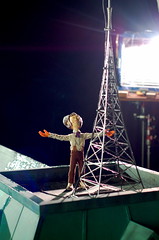 For a good chunk of the past year, several dozen animators have been working in a former native residential school near Mission, B.C., rented out to them by the current owners the Sto:lo Nation, on what looks to be a fascinating movie, Edison and Leo, which should come out later this year.
It's the first feature-length stop-motion film made in Canada, which is suprising considering this country's long history of innovative animation projects. I visited the set last week with my friend Jeff, who is working on publicity for the project.
Edison and Leo has a dark, retro, steam-punk look (it's set in the 19th century), and when production was at its peak late in 2007, there were as many as 14 sets in use simultaneously. Now that the main shooting process is winding down, there are only a few sets left, but it's still a strange experience if you've ever visited a movie set before.
Unlike computer or traditional animation, stop-motion has actual sets, with all the wiring, lighting, and construction that entails. However, the sets are at a strange scale, built for characters a few inches high. And while live-action sets require absolute silence and very careful tiptoeing around, with Edison and Leo Jeff and I were able to wander about, say hi to people as they worked, take photos, and generally feel at ease—because each animator produces, on average, less than 10 seconds of footage a day, one frame at a time. Take a look:


There were some neat details. "Filming" actually takes place with modern Canon digital still cameras, hooked up (oddly) to old manual-focus Nikon lenses. They're connected into computers next to each set, which the animators can use to check their work, and then through a jury-rigged fibre-optic cable network run through the old school to a set of storage servers, and also to a room where the movie can be edited on the fly.
The production facility is almost completely self-contained: all the sets, costumes, and characters are built on site, which gives the team a lot of flexibility and also keeps costs down. (Most of the staff are from other parts of Canada, and have been living in trailers on the property.) Other than the sets themselves, the building still looks like a school, which is pretty creepy considering its history.
If you'd like to read up on the project, check The Province, the Victoria Times-Colonist, the Deadwood blog, the MTV Movies blog, Playback, Telefilm Canada, and IMDB.
Labels: animation, canon, edisonandleo, film, geekery, movie, nikon, photography