Penmachine
28 April 2010
Following the camper
My former co-worker Chris got married to Kerry recently, and they're posting travel photos from their camper-van U.S. honeymoon, which have been great fun to follow. What I especially like is that their wedding presents included sponsorships of various parts of their journey, and they include thank-you printouts in many of the pictures, like this and this.
It's all just terribly charming. I've traveled a lot in the western U.S.A. over the years, especially Oregon and California, so their photos bring back many fond memories. Oddly, I've never visited Yosemite National Park. Maybe someday, if my health improves. Maybe.
Labels: americas, blog, friends, navarik, photography, travel, wedding
25 April 2010
A brief visit to the 2010 Vancouver Camera Show
 Today was the 2010 Vancouver Camera Show, held by the Western Canada Photographic Historical Association at the Cameron Rec Centre in Burnaby, near Lougheed Mall. I wasn't planning to go, but it turned out that my daughter Marina's new lenses for her glasses, which we got yesterday, were flawed, and needed to be replaced by the optician at that mall, so the two of us were in the area and had some time to kill.
Marina was enthusiastic—she was interested in looking at old Polaroid cameras and to see what the event was like. We walked from the mall, and I paid my $5 admission. (Marina was free.) And wow, it's a heck of an event.
The rec centre gym was filled with dozens of tables with thousands of items of photographic and movie equipment, most of it of some vintage, like the Nikon FE I bought the other day (or a bit newer, or a lot older). Cameras, lenses, flashes, tripods, bellows, enlargers, filters, parts—a photo geek's dream.
It was still very busy, even though we were there barely an hour before closing time. The crowd skews heavily male, and older, but Marina and I had fun poking around at the various obscurities, most in black and chrome, or maybe even leather. I didn't bring much money, nor did we buy anything, yet we hardly noticed the time pass before her glasses were ready and we had to leave. I didn't even take any pictures!
I'll plan to attend again next year, if I'm healthy, and to go earlier. Both Marina and her sister might like to come along, if their photographic interest persists until 2011. Honestly, if I'd gone myself, I probably could have browsed all day. But like a gambler, I'd have to bring cash in advance and set myself a hard limit.
Labels: conferences, family, geekery, meetup, photography, vancouver
21 April 2010
Back to 1978
A couple of years ago, I bought an old Nikon F4 film camera (introduced in 1988), and I've enjoyed taking pictures with it, especially in black and white. It's a pretty big beast, though, and over time I've been thinking about the first camera I bought for myself in the early '80s, a manual-focus Nikon FG. Then I spotted a surprisingly cheap deal on eBay, and this week it arrived:
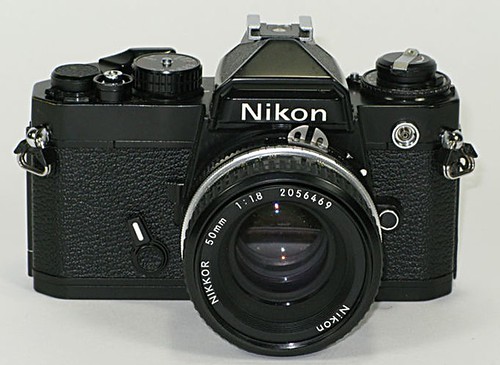
It's a Nikon FE, a slightly older (introduced in 1978) and slightly higher-end model than my FG, and it came with a manual-focus 50 mm Nikkor lens. For many years, the electromechanical FE, its companion mechanical FM, and their successors the FE2 and FM2 were often the backup camera bodies of choice for professional photographers—less expensive than the top-of-the-line F2, F3, or F4, but still rugged and simple to use.
Like my F4, this thing feels like a brick, because unlike the digital cameras most people buy today, the FE is almost all metal, including the lens housing. It's also surprisingly small, since it lacks the rubberized covering and big handgrips that digital SLRs like my D90 have. (Since film is out of fashion, the FE also cost me a tiny fraction of the price of the D90.)
Besides my general Gear Acquisition Syndrome and the dirt-cheap price, another reason I bought the FE is that my younger daughter L has been wanting to learn a bit more about photography, and the principles are much easier to demonstrate on an old film camera. With a fixed (non-zoom) lens on it, there are really only three things to adjust: aperture, shutter speed, and focus. DSLRs let you change ISO (sensitivity) and white balance too—among many, many other features—but with the FE those are determined by the film you choose.
I've loaded the FE with some 400-speed black-and-white film, and we'll see how the first photos turn out, and how the photographic experience compares to the F4 and D90. A nice feature of film cameras (despite the inconveniences) is that, whenever you buy new film, you're effectively putting a new sensor inside, so they don't really become obsolete the way digital cameras do.
Labels: cameraworks, family, geekery, nikon, photography
17 April 2010
Pretty psychedelic, man
Thank you, Kimli, for finding PhotoTropedelic for the iPhone. It is just too much fun:

Labels: apple, friends, iphone, pets, photography
09 April 2010
Buzz time
Once again, chemotherapy is doing bizarre and nasty things to my hair. It's thinning, while getting wiry and bushy and annoying. But rather than do the full Peter Garrett shave as I did two years ago, I went for my preferred buzz cut again:
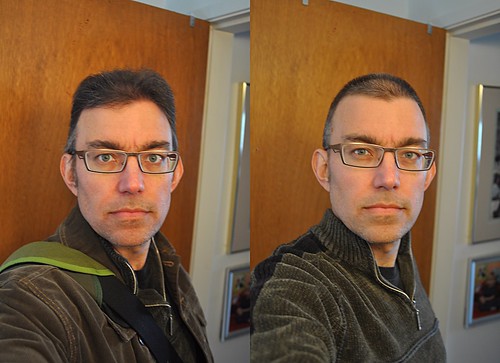
My "before" look on the left was about as as good as I could make it appear, but there was still something vaguely Kim Jong-Il about it. I prefer the shorter version on the right, and I'll try to keep it that way.
Labels: cancer, chemotherapy, photography
04 April 2010
How did it get here?
A desiccated fruit husk, about 5 cm long, sat delicately on a nearby lawn this afternoon. I spotted it while walking the dog:
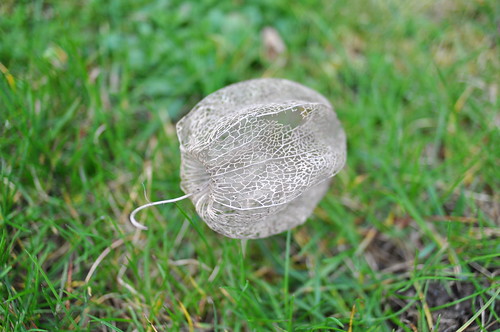
Did dry out like that naturally? I've seen similar veins-only leaf skeletons around, but this seems much more fragile:
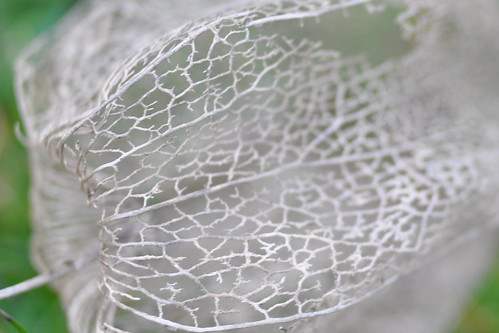
I wonder what kind of fruit it was, and how it got there.
Labels: biology, photography, vancouver
03 April 2010
Strat-o-glasses
A few weeks ago, when I bought my new eyeglasses, both my wife Air and my daughters' piano teacher Lorraine independently said that one pair—my set of black Ray-Bans with pearloid decorations on the sides—strongly resembles a Fender Stratocaster guitar, like the black and white one I own. I didn't notice it when I picked the specs, but they're quite right:
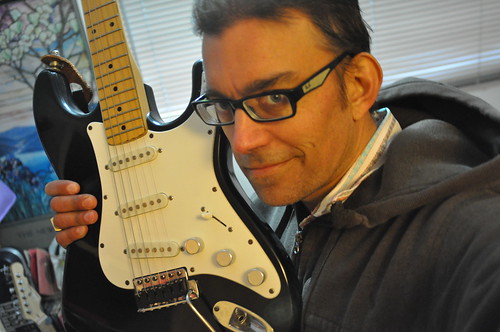
In this photo, I also bear a frightening resemblance to Vince the ShamWow guy. That too was entirely unintentional, believe me. (Though maybe I can make America skinny again, one chord at a time!)
Labels: celebrity, glasses, guitar, music, photography, television
23 March 2010
Another party movie
Reilly made a movie of the party we went to on the weekend:
You might recall another one of his videos I posted a couple of weeks ago.
Labels: birth, friends, geekery, movie, party, photography, vancouver, video
21 March 2010
Spring
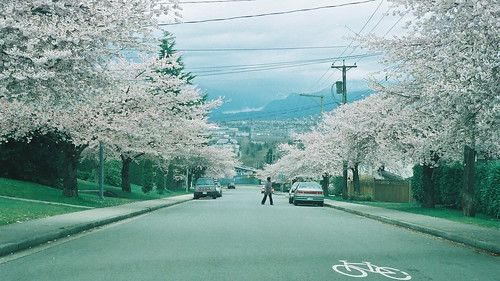
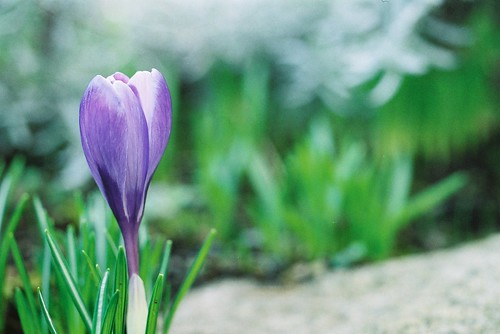
It's Spring now, and in Vancouver, it feels like it:
In part to celebrate, Air and I went to a party last night, where everyone dressed up. We also got some of my favourite photos ever of us. Here's one with a cat, a young princess (who left early), me (in fedora), Air (pink hair), and our pal Catherine, who had the evening's best hat:

Thanks to Reilly and happy 30th birthday to Miranda, who were our hosts. I have my next bout of chemo tomorrow, so it was good to do something fun while I could.
And didn't my wife look fabulously hot?
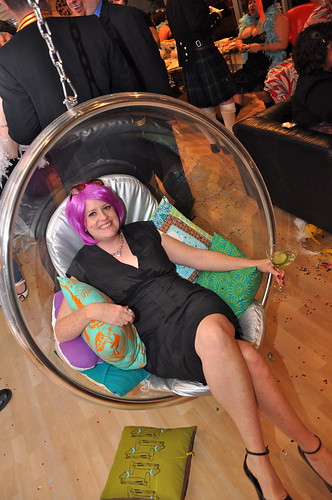
Especially with the martini and the bubble chair. It was like 1968, baby! Except with iPhones.
Labels: birthday, friends, party, photography, vancouver, weather
18 March 2010
I know, I know
People who put pictures of their pets on their blogs are a Web stereotype. I know. But come on...
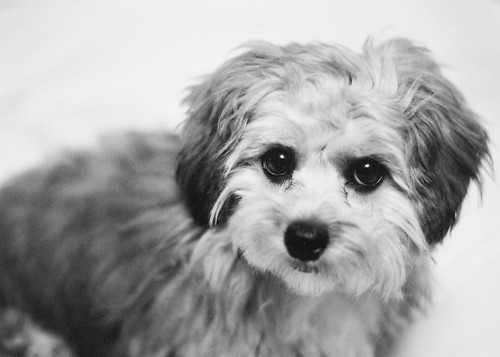
...what am I supposed to do? Not post that?
Labels: blog, pets, photography
17 March 2010
The Nikon FM3A
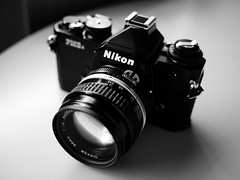 Camera nerds have strange obsessions. Among film cameras, the Leica M series of small rangefinder devices is probably top among photo fetishists, who might argue about whether the original 1950s M3 or the current M7 or MP is the optimum design.
But to me, the manual-focus, precision-built electromechanical Nikon FM3A SLR is the real star of these old-school cameras. It was an oddity when Nikon introduced it in 2001—by which time ergonomically-shaped, plastic-bodied autofocus cameras were what almost everyone used, and digital was poised to take over from film almost entirely. (Even the FA of 1983, or the intro-level FG I owned around the same time, had more modern features in many respects.)
But Nikon was intentionally building a modernized retro camera for those fetishists. It offers basic but powerful light-metering, manual focus assistance, fill-flash compatibility, and aperture-priority automation if you want it. But it is also a fully-mechanical machine that will operate perfectly (except for the light meter) without any batteries. All the power to run it can come from energy stored in springs when you ratchet the film advance lever with your thumb, something that's hard to comprehend for anyone who's used to today's battery-sucking digital beasts, or even my 1988 autofocus Nikon F4.
Nikon only made the FM3A for five years, and manufactures nothing at all like it today. (Indeed, almost no one besides Leica makes fully mechanical cameras anymore.) If you can find one, it sells for pretty close to the $800 the model fetched when new, which is still a fraction the cost of a Leica or a top-of-the-line digital Nikon SLR. And it will use most Nikon-mount lenses made between 1977 and quite recently, when the company stopped including aperture rings on their SLR lenses.
I'd compare this rugged Nikon with modern versions of the Fender Stratocaster guitar, or a brand-new fountain pen: the FM3A looks superficially like something created decades earlier, and works pretty much that way too, but it has some clever modern enhancements that smooth the way for enthusiasts or professionals to use it elegantly. It's neat that Nikon ever decided to create it, and like the still-manufactured Nikon F6 film SLR, it's probably among the last of its kind.
Labels: film, geekery, history, nikon, photography
06 March 2010
Movie from still frames
Our friends Miranda and Reilly had going-away party last night for Tanya, who's moving to Calgary with her fiancé Barry. Reilly made a video:
Interestingly, he used a digital still camera. Not even the movie mode on a still camera, but the super-high-speed burst shooting mode of his top-of-the-line Canon EOS-1D Mark IV digital SLR, which can fire away at up to 10 frames per second. (Miranda and Reilly are the kind of people who are supposed to have expensive cameras. They're wedding photographers, and very good ones.)
The final video, compiled from over 5000 individual photographs, is arty, and a bit strange. My wife Air and I are in it, mostly in the background, but we're featured about four and a half minutes in, just as we were leaving. I'm Mr. Handshaking-Guy-in-a-Hat.
Labels: friends, geekery, movie, party, photography, vancouver, video
26 January 2010
Another birthday
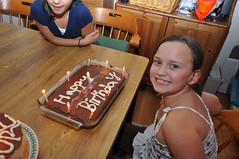 Our daughter L turned ten today. She was born at St. Paul's Hospital, as was her older sister, and as was I.
She had a party on the weekend, but unfortunately I was so doped up on chemo and antinauseants that, as expected, I slept through the whole thing. Fortunately, my wife took some great pictures, so I have some idea what it looked like.
Happy birthday, L. I'm glad I made it to see her hit two digits.
Labels: birthday, chemotherapy, family, photography
15 January 2010
Olympic mascot Quatchi visits the Downtown East Side
I like the Olympics, but I have to say the Flickr photo set where Quatchi the 2010 mascot tours Vancouver's poor Downtown East Side neighbourhood is clever and to the point:

Quick PR tip to the Vancouver Olympic Organizing Committee: trying to shut this piece of satire down as trademark infringement or something would probably be a bad idea.
I'm off to chemotherapy this morning, so don't expect much in the way of blog posts and such for three or four days while I sleep it off. Actually, it turns out my chemo is postponed a week: my neutrophil, platelet, and hemoglobin levels are borderline, so I need to recover more. Yay for no nausea for now; boo for offsetting plans we've made this month and in February based on my previous chemo schedule.
Labels: humour, olympics, photography, poverty, vancouver
22 December 2009
Merry Christmas, y'all
The weather at the beginning of this winter has been nothing like last year; the only snow locally in Vancouver is on the mountains. So I'll post our family Christmas card (the first to include our new puppy Lucy) a bit early:
![[The Miller family, Christmas 2009]](http://www.penmachine.com/family/cards/xmas2009lg.jpg)
From left you have my daughter M with Lucy, my mom, me (top) and my dad (bottom), my wife Air, and my daughter L. Oh, and my parents' etchings, of course.
I hope you're all warm and safe, and will be well fed this week.
Labels: family, holiday, pets, photography
14 December 2009
Picture time
What with all the new cancer and chemo (more this Friday!) and stuff, I've neglected to upload new photos in quite a while; they've just been accumulating on my camera's memory card. Time to fix that. Here are a few of my recent favourites:

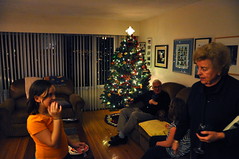
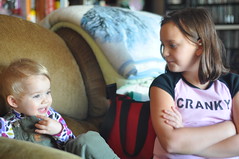
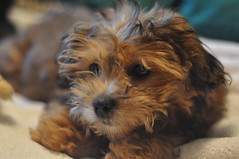
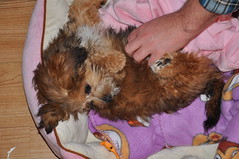
Yes, there are many many puppy pictures. Get used to it.
Labels: family, holiday, pets, photography
20 November 2009
See the world
 Since 1972, the Landsat satellites have been photographing the surface of the Earth from space. However, the amount of data involved meant that only recently could researchers start assembling the millions of images into an actual map, where they could all be viewed as a mosaic.
NASA has posted an article explaining the process. The map covers only land areas (including islands), but it is not static—it includes data from different years so you can see changes in land use and climate.
Here's the neat thing. Back in the 1980s, while the information was there, putting even a single year's images into a map would have cost you at least $36 million (USD). Now you can get the whole thing online for free. Take a look. If you poke around, there's a lot more info than in Google Earth.
Labels: astronomy, geekery, photography, science, space
31 October 2009
Links of interest (2009-10-31):

- The rotor on the new Grouse Mountain wind turbine is turning very slowly, first time I've seen it move. Must be testing.
- Notice that when they have all those many layers on, supermodels almost look like normal people?
- Sydney, Australia covered the road of the Harbour Bridge with grass and cows, and 6000 people had a picnic.
- "No child has been poisoned by a stranger's goodies on Halloween, ever, as far as we can determine."
- Brent Simmons on vaccines (via Daring Fireball). I had chicken pox almost as bad, but at 15. My wife Air got shingles in '04. I'm flad the kids will get neither.
- If, like many Canadians, you have a huge voice crush on Nora Young, then this audio from CBC's Spark will slay you.
- Awesome song flowcharts for "Total Eclipse of the Heart" and "Hey Jude."
- Dan Savage is always so cheecky: "I don't believe that couples who make the choice to be monogamous should be discriminated against in any way."
- Archaeology doc "The Link" a few months ago was full of needless hype. Discovery Channel's "Discovering Ardi" shows how it's done properly.
- "I'm all for winging it, but saying 'I'm not really prepared' to an audience shows them the ultimate disrespect."
- Some interesting iPhone photography apps.
- Dark areas on this world map are the most remote from a city. No Antarctica, though.
- A new deal today with the Cowichan band means you'll be able to buy real sweaters at HBC Olympic store.
- Twelve images showing how vastly digital imaging has improved astrophotography on the ground and in space since 1974.
- Seven questions that keep physicists awake at night (still lots to learn, which is great).
- First-ever Lip Gloss and Laptops video podcast (for Halloween).
- American Samoa could have had a tsunami warning system, but funds were frozen in 2007 because of waste and corruption.
- Telus is selling iPhones in Canada Thursday of this week (Nov 5). Pricing is basically the same as Rogers/Fido (no surprise).
- The opposing Canadian "No TV Tax" vs. "Local TV Matters" ads are indistinguishable, obnoxious, and make both sides look like shitheads. Makes me want to go out and get some man-on-the-street interviews. "Excuse me, ma'am, did you know that both the TV networks and the cable companies are wasting money on advertising instead of trying to make better programming, using fake man-on-the-street interviews to try to confuse you about their own pissing contest? What do you think of that?"
- Here's a flu primer. The October 25 edition of CBC's "Cross Country Checkup" (MP3) is also good. Here's a slightly contrary position, and a more general one about the dangers of not vaccinating. Wired also has a cover story on the topic.
- Weird Al's relentless perfectionism in the studio (love when he gets a headache trying to channel Zack de le Rocha).
- As of today it's been 32 years since the last case of smallpox in the world was eliminated by vaccination.
- The 27" iMac has a shockingly low price for what you get - even for the LCD panel alone (via Dave Winer).
- Dave Winer also notes why death of a parent can make you grown up. My parents are alive, and doing great (better than me!).
- I like Barbara Ehrenreich's new book, though I haven't read it yet.
- Two people I know both had cancer surgery the same day, this past Monday.
- Top 10 Internet rules (via Raincoaster).
- $400 is expensive, but if you make serious video with a DSLR, I bet this LCD viewfinder is worth it (via Scott Bourne).
- Having to medivac a sailor from a US Navy submarine to a helicopter offshore is hairy and dangerous business!
- As Paul Thurrott said, people are going to be wandering into Microsoft's new store all the time and asking, "Excuse me, where are the iPods?"
- "If what you're doing does make sense, then, for Christ's sake, talk like a human being."
- From Psychology Today in 2008, ten ways we get the odds wrong on risk.
- You can now buy the whole Abbey Road album for Beatles Rock Band.
- Daughter M just described a fever-induced time dilation hallucination identical to mine from childhood. Never thought anyone would understand!
- Red Javelin Communications is apparently working with my company Navarik, but I'm finding their website rather too buzzwordy for my taste.
- Research in Motion. Oh, what will we do with you and your fine, fine, not-at-all-dirty URL http://rim.jobs?
- A great (much improved) update by Billy Wilson to my very popular "All the Current DLSRs" camera collage.
- Here's a sign of flu in our neighbourhood: our local Shoppers Drug Mart was entirely sold out of hand sanitizer. Both my kids were stricken, but I avoided it.
- Noya sings with my band sometimes. Here's her solo video.
- Another Ralph Lauren Photoshop disaster.
- The Diamond Dave Soundboard is still genius.
- As always, Saturn's rings and moons are some of the strangest and most beautiful things you can see.
Labels: australia, beatles, cbc, environment, evolution, holiday, lipglossandlaptops, microsoft, photography, podcast, sex, vancouver, video
22 October 2009
Spin my ribcage
Derived from the same CT scan of my body taken a few weeks ago is this 3D movie, also made with the open-source OsiriX software:
You can clearly see my portacath, which showed up just as well as my ribs. Freaky.
Labels: cancer, chemotherapy, ctscan, geekery, photography, science, software, videogames
20 October 2009
See my cancer
Here, take a look at this extremely cool and scientifically amazing picture:
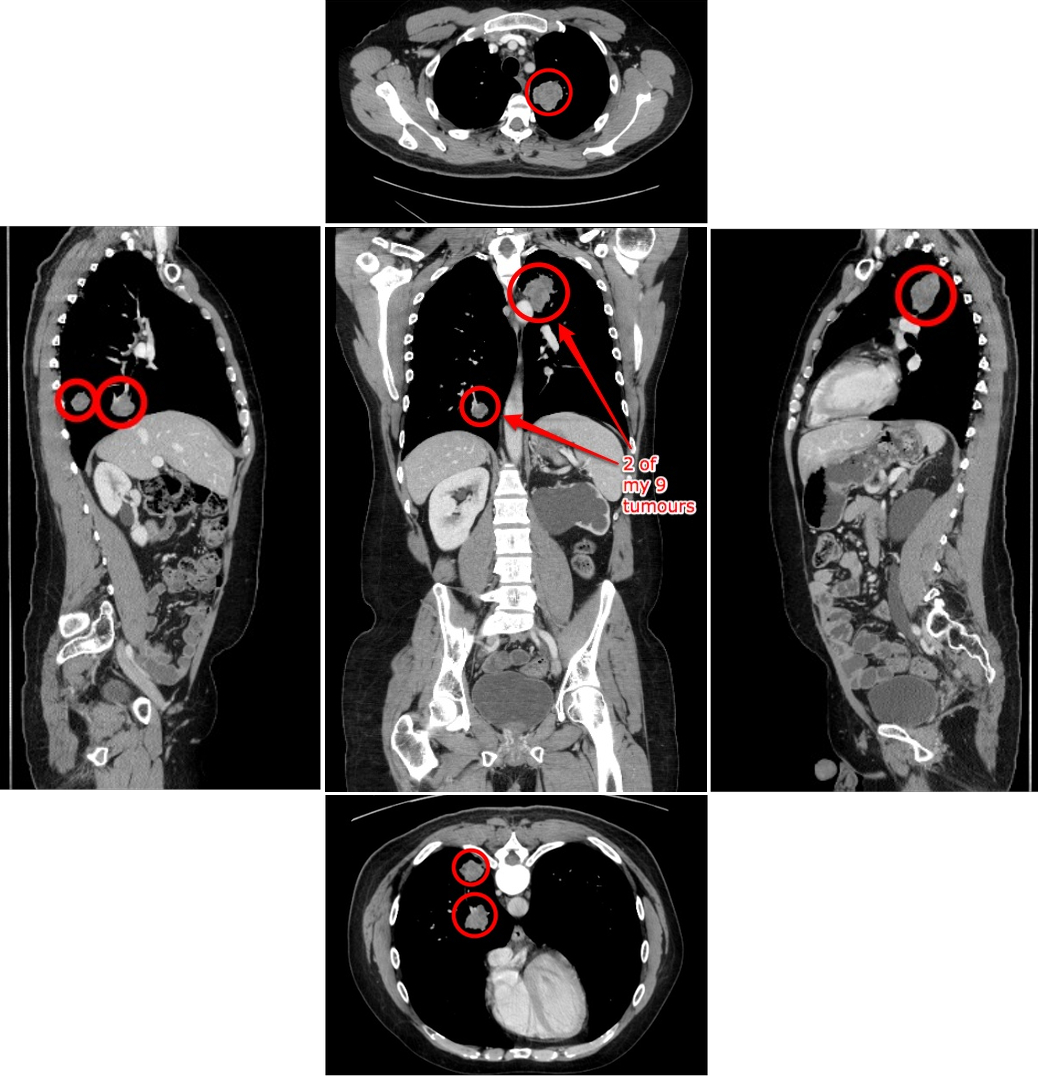
That's me, via a few slices from my latest CT scan, taken at the end of September 2009. I opened the files provided to me by the B.C. Cancer Agency's Diagnostic Imaging department using the open-source program OsiriX, giving me my first chance to take a first-hand look at my cancer in almost a year. Before that, the I'd only seen my original colon tumour on the flexible sigmoidoscopy camera almost three years ago.
I've circled the biggest lung tumours metastasized from my original colon cancer (which was removed by surgery in mid-2007). You can see the one in my upper left lung and two (one right behind the other) in my lower left lung. There are six more tumours, all smaller, not easily visible in this view. I'm not a radiologist, so I couldn't readily distinguish the smallest ones from regular lung matter and other tissue. Nevertheless, now we can all see what I'm dealing with.
These blobs of cancer have all grown slightly since I started treatment with cediranib in November 2008. To my untrained eye, the view doesn't look that different from the last time I saw my scan in December of that year, which is fairly good as far as I'm concerned. Not as good as if they'd stabilized or shrunk, but better than many other possibilities.
Labels: cancer, chemotherapy, ctscan, geekery, photography, science, software, video
19 October 2009
Links of interest (2009-10-19):
From my Twitter stream:
- My dad had cataract surgery, and now that eye has perfect vision—he no longer needs a corrective lens for it for distance (which, as an amateur astronomer, he likes a lot).
- Darren's Happy Jellyfish (bigger version) is my new desktop picture.
- Ten minutes of mesmerizing super-slo-mo footage of bullets slamming into various substances, with groovy bongo-laden soundtrack.
- SOLD! Sorry if you missed out.
I have a couple of 4th-generation iPod nanos for sale, if you're interested. - Great backgrounder on the 2009 H1N1 flu virus—if you're at all confused about it, give this a read.
- The new Nikon D3s professional digital SLR camera has a high-gain maximum light sensitivity of ISO—102,400. By contrast, when I started taking photos seriously in the 1980s, ISO—1000 film was considered high-speed. The D3s can get the same exposure with 100 times less light, while producing perfectly acceptable, if grainy, results.
- Nice summary of how content-industry paranoia about technology has been wrong for 100 years.
- The Obama Nobel Prize makes perfect sense now.
- I like these funky fabric camera straps (via Ken Rockwell).
- I briefly appear on CBC's "Spark" radio show again this week.
- Here's a gorilla being examined in the same type of CT scan machine I use every couple of months. More amazing, though, is the mummified baby woolly mammoth. Wow.
- As I discovered a few months ago, in Canada you can use iTunes gift cards to buy music, but not iPhone apps. Apple originally claimed that was comply with Canadian regulations, but it seems that's not so—it's just a weird and inexplicable Apple policy. (Gift cards work fine for app purchases in the U.S.A.)
- We've released the 75th episode of Inside Home Recording.
- These signs from The Simpsons are indeed clever, #1 in particular.
- Since I so rarely post cute animal videos, you'd better believe that this one is a doozy (via Douglas Coupland, who I wouldn't expect to post it either).
- If you're a link spammer, Danny Sullivan is quite right to say that you have no manners or morals, and you suck.
- "Lock the Taskbar" reminds me of Joe Cocker, translated.
- A nice long interview with Scott Buckwald, propmaster for Mad Men.

Labels: animals, apple, biology, cartoon, geekery, humour, insidehomerecording, iphone, ipod, itunes, linksofinterest, nikon, photography, politics, science, surgery, television, video, web
13 October 2009
Growth of the City of Glass
Dave Winer has posted a bunch of photos from his parents, reaching back more than 50 years. A picture of Vancouver's Coal Harbour from his family trip here in the '60s is fascinating, because here's a similar view today.

Things have changed a little. If you open the two images in separate windows or browser tabs and look carefully, you might be able to spot a couple of the same buildings.
Labels: davewiner, history, photography, vancouver
26 September 2009
Links of interest (2009-09-26):
- Photo sharing site Flickr has these new Gallery things.
- Homemade stratosphere camera rig goes sub-orbital to 93,000 feet (18 miles). Total cost? $150.
- Suw Charman's life is "infested with yetis."
- AIS is the way that commercial ships and boats report their near-coastal positions for navigation. The Live Ships Map uses AIS data to show almost-real-time positions for vessels all around the world. Zoom in and be amazed.
- Strong Bad Email #204 had be laughing uncontrollably. Make sure to click around on the end screen for the easter eggs.
- Julia Child boils up some primordial soup. Really.
- Funky bracelets made from old camera lens housings. Nerdy, yet cool.
- Adobe Photoshop Elements 8: most of the cool features, about 85% cheaper than regular Photoshop.
- Vancouver's awesome and inexpensive Argo Cafe finally gets coverage in the New York Times.
- When people ask me to spell a word out loud, I notice that I scrunch up my face while I visualize the letters behind my eyelids.
- Via Jeff Jarvis: in the future, if politicians have nothing embarrassing on the Net, we'll all wonder what it is they're hiding and why they've spent so much effort expunging it.
Labels: cartoon, evolution, flickr, food, linksofinterest, marine, photography, politics, restaurant, science, software, vancouver, web
22 September 2009
The big cry
I've been digitizing some of our old home videos (using a DVD recorder and a Video8 camera borrowed from Paul to replace our long-broken one). Footage of my daughters as babies prompted me to hunt for a particular old scan—this one:
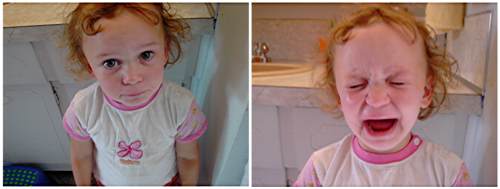
I think I took the two pictures in 2002, when my daughter was about two and a half. She's nine years old now. And I doubt she'd let me get away with taking a similar photo today.
Labels: family, memories, photography, video
13 September 2009
It looks like Leica is back, finally
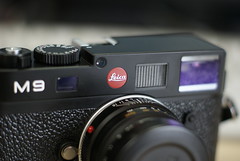 Back in the early 20th century, Leica cameras were the first to make 35 mm film practical for still photography (instead of movies). For decades, they defined well made, technically innovative photographic tools. But since the autofocus and digital revolutions of the 1980s and 2000s, Leica seemed to lose its way. Though the company made partnerships with Minolta and, more recently, Panasonic—repackaging Panasonic cameras as Leicas with a few cosmetic and firmware changes, and charging a lot more money for the name—its flagship German-made SLR and rangefinder cameras fell behind the rest of the industry.
Some professionals continued to use Leica cameras, mostly because of the superb lenses, but among amateurs and enthusiasts, the brand became more of a cult, with its extremely high-priced cameras and lenses fetishized by collectors, but used less and less by regular people taking pictures. In 1982, Leicas were the official cameras taken by the first Canadian expedition to reach the summit of Mt. Everest. Almost 30 years later, it would be hard to imagine such an expedition making a similar choice.
Yes, today's popular cameras (amateur and professional) include a lot of what the Leica Man would call superfluous. But even hard-core photographers—or especially them—now demand autofocus, intelligent computerized exposure metering, and state-of-the-art digital capture. Leica, in contrast to Japanese latecomers like Canon, Nikon, and even Sony, could offer none of these things. Technically, Leica's bulletproof M-series rangefinders were stuck in the '60s, and their R-series SLRs in the '70s. For the huge amounts of money Leica charged, their digital offerings like the crop-frame M8 rangefinder and Modul R digital back seemed (quite literally for the Modul R) like bolt-on afterthoughts.
But this week, Leica introduced these:
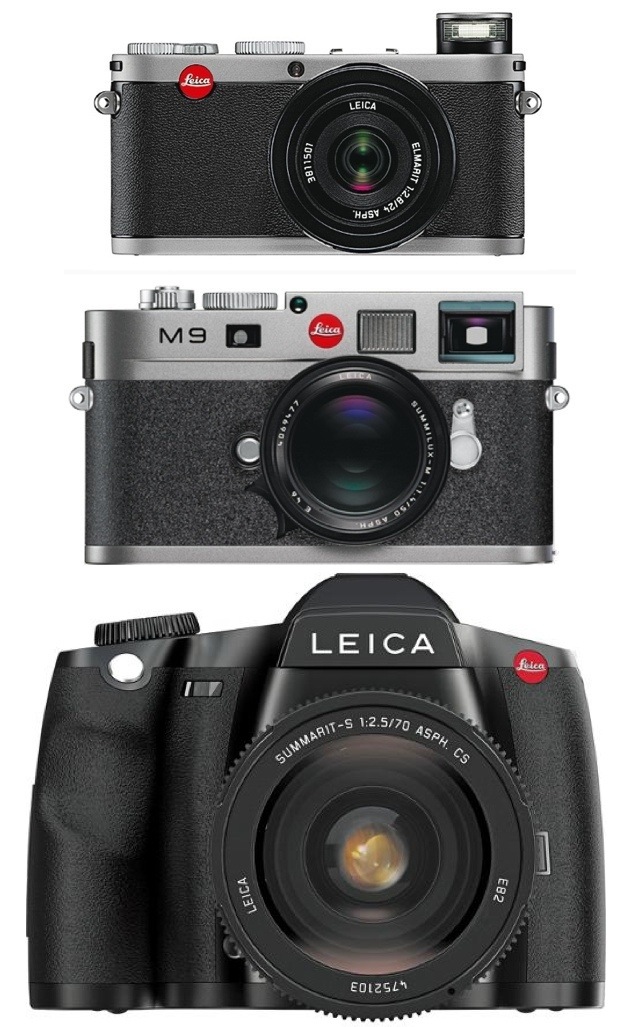
They are the new Leica X1 compact camera ($2000 USD), M9 full-frame digital rangefinder ($7000 USD), and S2 medium-format digital SLR ($22,000 USD). (The X1 and M9 are just announced; the S2 first appeared last year, but only now is getting near release, with an actual price.)
No, I did not accidentally add an extra zero to those prices. Leicas remain among the most expensive still cameras available to those outside the military, space programs, and specialized technical and scientific fields. Their lenses, if you can believe it, are even more upscale and (many say) of unsurpassed quality. For the M series rangefinder cameras, a "low end" f/2 Summicron 50 mm is $2000 USD, while its big brother, the top-of-the-line f/0.95 super–low-light Noctilux 50 mm is $10,000 USD. The S-series lenses start at $4500.
And yet, for once, these cameras are unique and innovative. All three are assembled in Germany, to start. The X1 is probably still overpriced, but it does include a genuine Leica lens and an unusually large (and thus low-noise) sensor for a compact camera. The M9 is, for many aficionados, the holy grail they've been waiting for since digital cameras became mainstream: a Leica rangefinder, of the same dimensions and metallic heft of its predecessors, fully compatible with nearly every Leica M lens made since 1954, yet with a full-frame 18-megapixel digital sensor like those in high-end digital SLRs.
The S2, while well out of reach of any normal photographer (even those who might consider an M9), is the really unusual one: Leica's first real foray into medium-format photography. The sensor is more than 50% larger than a full-frame 35 mm chip, but the camera itself is similar in size to Canon's smaller-sensored 1D and 1Ds Mark III and Nikon's D3 and D3x cameras, and has a much simpler interface than other modern DSLRs.
The S-series lenses are huge and heavy, but until now (with the marginal exception of the Mamiya ZD), digital medium-format photography hasn't had the convenience of autofocus SLR handling and simplicity. From the initial quick impressions of people who've tried it, Leica may have created a winner for high-end studio and landscape photographers in the S2. And, for the first time in many years, Leica has a truly modern camera that no one else can match. For now.
Labels: canon, geekery, leica, nikon, photography, sony
11 September 2009
Lonely cactus
Time lapse video between 8:00 a.m. and 2:00 p.m. I had hoped one of the flowers would open, but no such luck. Music is from my track "Striking Silver."
Labels: biology, home, photography, video
28 August 2009
All PNE all the time
As we (and many fellow Vancouverites) do every year, my family visited the Pacific National Exhibition yesterday, and had a lot of fun. My kids had already been there with my parents, and we're going again next week, but that didn't stop anyone:


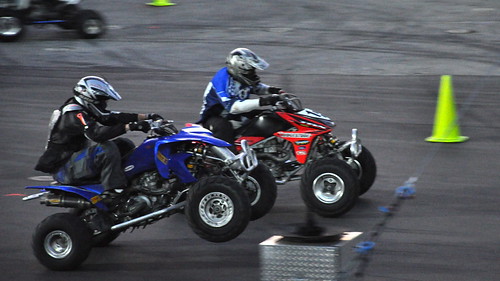
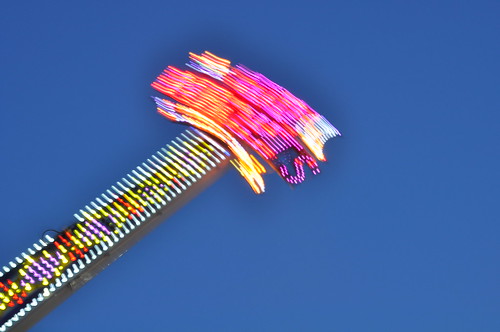
Despite some medication side effects, I even made it through the whole day. I no longer go on the rides myself (I've been prone to barfing from spinny rides for at least 15 years, and the cancer meds certainly don't help), but my wife and kids used their all-day ride passes to full effect.
Labels: family, holiday, photography, playland, vancouver
10 August 2009
More luscious black and white
It's partly because of the look of using a larger frame of film, partly the texture it imbues, and partly because I'm just more careful when using an expendable resource, but as I've mentioned before, I get more keeper photographs when I shoot with black and white film than when I use my digital SLR. These are from a couple of recent rolls:
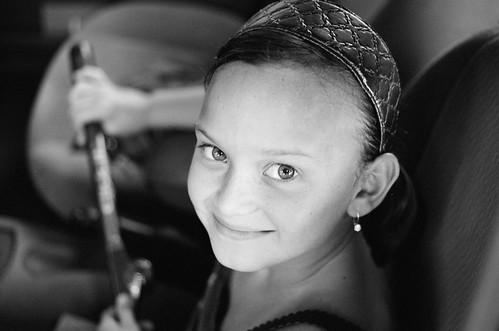
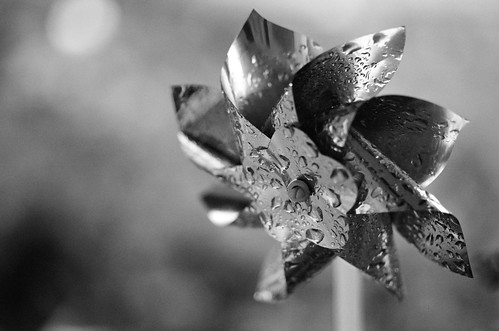
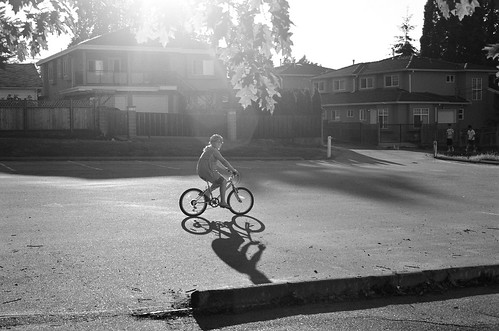
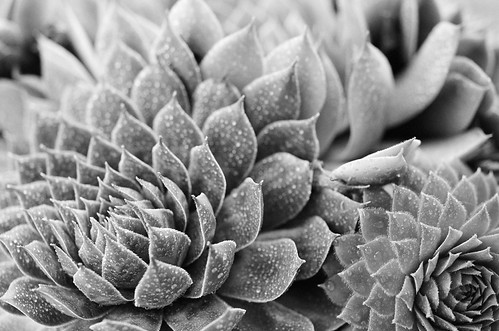
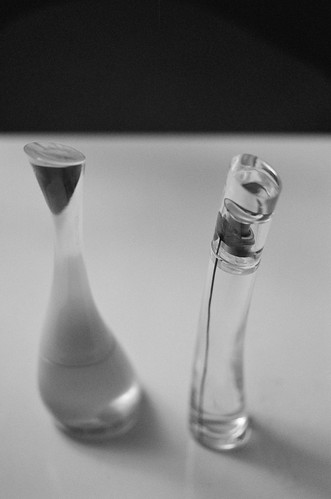
I didn't have to go far to get them either—I took all these pictures either in our house, in the yard, or at my kids' school up the street, all with natural light and no flashes or reflectors. I'm certainly not regretting my purchase of that used Nikon F4 or macro lens last year.
Time to pick up another roll or two of B&W, I think. I've run out for now.
Labels: film, geekery, nikon, photography
09 August 2009
Snowbirds overhead
This weekend in Vancouver included the Abbotsford Airshow, the Burnaby Blues and Roots Festival, the Under the Volcano festival, and the closing ceremonies of the World Police and Fire Games (WPFG). Twice over the past few days, I've seen the Canadian Forces Snowbirds aerobatics team fly directly over my head in conjunction with some of those events. Once in Stanley Park (presumably to promote the Airshow):
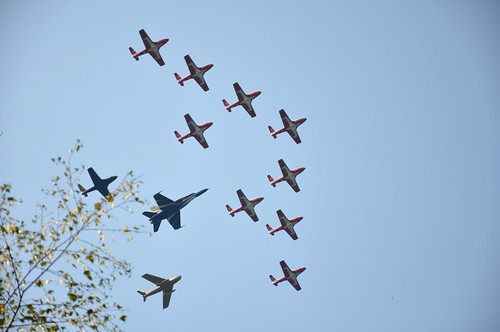
And once this evening right in our front yard, when the Snowbirds flew right over our house (on the last of four passes). At first I thought it was for the Blues Fest, but I think it was really for the WPFG finale:
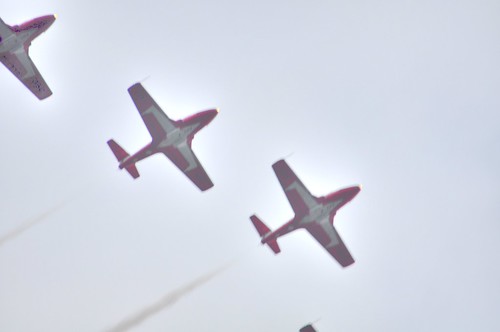
Both times, I could almost read the markings on the bottoms of the planes. It still amazes me that human beings, we apes from the savannah, can control flying machines traveling at hundreds of kilometres an hour in formation:
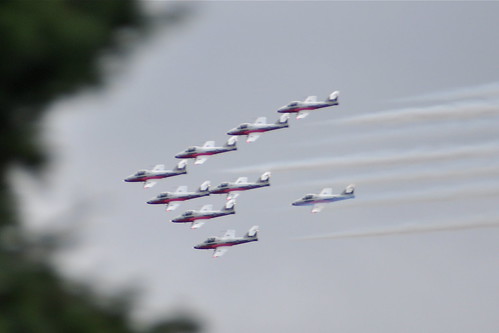
Such brains we humans have.
Labels: airport, music, photography, sports, transportation
28 July 2009
Making stories, showing off (for Raul's Blogathon)
This is a re-post of the guest entry I wrote for Raul's Blogathon on Saturday.
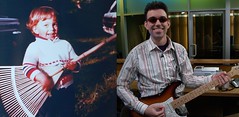 Here's a story. Two years ago this week, I weighed 145 pounds, about 70 pounds less than I do now. I looked like I'd been in a PoW camp, pale and skeletal. I'd just left St. Paul's Hospital, where I'd been for close to a month after major cancer surgery and an intestinal blockage.
By October I'd gained back 30 of those pounds. Within a year I'd taken a bunch more chemotherapy, lost my hair and grown it back, and had terrible chemo-induced acne. A year after that, the cancer is still here, but I'm fighting it, and I feel pretty good. End of story, for now.
We all grow up making stories—when we're kids, we call it playing, whether it's using an infant mobile or a video camera. And our stories are best when we make them for others, or with them. Unfortunately, many of us become unused to playing, thinking it childish. We grow up terrified of giving speeches, or we write our thoughts only in diaries instead of for reading. We become shy.
For whatever reason, that didn't happen to me. I've been passionate about many things in my 40 years—computers, photography, public speaking, music, making websites, writing and language, science and space, commuting by bicycle, building a life with my wife and family—but when I took at them all, each one is really about making stories for others. Or, as my wife succinctly pointed out, about showing off. I'll admit to that.
Some examples, in no real order:
- Helping put together a school newspaper in sixth grade (or high school, or university).
- Donning a smoking jacket and hand prosthetic to play Captain Hook on the elementary school stage.
- Setting my daughters up with blogs and email addresses before they each turned ten.
- Posting photographs to MacDesktops in the late '90s and photo.net a few years later.
- Playing in a band in crappy bars or luxury New York hotels.
- Editing my high school yearbook (with others) and the UBC student handbook (by myself).
- Teaching courses about Microsoft Word.
- Talking about my cancer on the radio.
- Talking about geeky stuff on TV.
- Recording songs and giving them away for free.
- Helping my wife Air put together her podcast.
- Uploading thousands of pictures and videos to Flickr.
- Crafting obscure technical documents to make them understandable.
- And of course blogging and blogging and blogging for close to nine years.
I've done many of these things for no money (and some for lots of money), but for almost all of them, I wanted other people to know.
Okay, yes, I wanted to show off. Is that healthy?
For me, on balance, I think so. Whether for my jobs or my hobbies, being a ham and wanting others to see and appreciate what I do prods me to make those stories good, and useful. Humans are natural tellers of stories, and we enjoy anything presented in a story-like way. So I've tried to make all of those things in the form of a story. Whether a discussion of evolutionary biology, a fun rockabilly instrumental, a bunch of rants about PowerPoint, or a pretty photograph (or yes, even the instruction manual to install a wireless cellular modem in a police car), I want it to generate a story in your mind.
Stories don't always have an obvious structure. They don't necessarily go in predictable directions, or have a moral or meaning. I certainly didn't see it coming when all this cancer stuff from the past two and a half years happened. But I've been able to make it a story that other people can read, understand, and maybe find helpful. So too with my other passions.
So whatever you're trying to do, whatever hobby or job or habit you have, if you want to share it with others, try to craft it like a story—short or long, visual or auditory, but something that flows. Show it off. That, it seems, is what I like to do.
Derek K. Miller is a writer, editor, web guy, drummer, photographer, and dad. Not in that order. He's been blogging at penmachine.com since 2000, and has been on medical leave from his position as Communications Manager at Navarik Corp. since 2007. His wife and two daughters have put up with his show-offishness way longer than that.
Labels: band, blog, cancer, charity, editing, friends, music, photography, vancouver, writing
26 July 2009
My new Crumpler man purse
On the way down to Workspace to visit the Blogathon crew yesterday, my daughters and I passed by the Crumpler store at the edge of Gastown in downtown Vancouver. After nearly losing my wallet on a chairlift in Whistler earlier in the month (I did drop a snack bar), I realized that my old Hedgren shoulder bag/man purse, at least five years old, needs replacing.
I've been searching for something that can hold all the stuff I haul with me (insulin, blood glucose meter, Leatherman tool, wallet, emergency sugar, mobile phone, etc.), plus my monster DSLR camera and whatever extras I might grab for a particular day. Something bigger than I had been carrying, in other words:
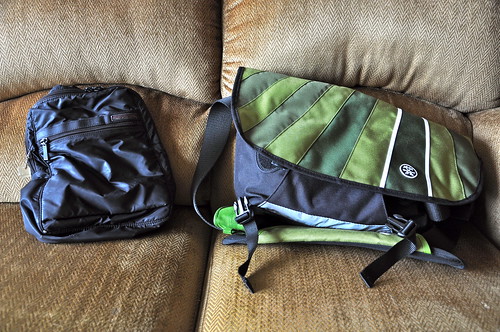
Old Hedgren bag on the left, new Crumpler bag on the right.
Since I sling my bag over my shoulder everywhere I go, I know what I need. I like my bags, and have blogged about them a couple of times before. But none of my current other bags would do the job. I had no luck finding a replacement along Vancouver's outdoor-gear row on Broadway near Cambie Street, but Crumpler had something I liked: the Barney Rustle Blanket shoulder bag.
Yes, Crumpler has pretty weird names for its products. Check out the names of the various bags John Biehler has bought over the years, for instance. You can pick up the Barney Rustle in green on Amazon for $125 USD, or some other colours for less, but even Crumpler's own site doesn't offer prices as good as the real-world store. I got my Barney Rustle for $89 Canadian, plus tax.
Yeah, it's a lot bigger than my old bag. I could stuff my SLR into the old bag, but it was then completely full, and prone to unzipping and falling open. The new one takes the camera with a big lens, plus my flash, with room to spare. I could drop a laptop inside if needed. The thing is built like a medieval fortress in nylon. I'm still figuring out just how I prefer to pack it, but I definitely like it so far.
Labels: bags, family, geekery, photography
25 July 2009
Zap: Vancouver's July 2009 lightning storm
We had a bit of a lightning storm in Vancouver tonight, which is unusual around here.
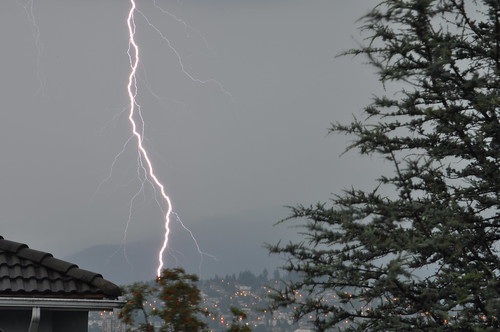
My photo was featured on the website for The Province newspaper this evening too. Thanks to my wife Air for suggesting I send it to them.
UPDATE JULY 26: While my photo above was one of the first posted on Flickr (and on a newspaper website), many other more spectacular shots appeared once people got home from the Celebration of Light fireworks and so on, especially with pictures taken as sunset cast the sky a Martian red. Check out some of the lightning images I found from happygilmore_s_d, drlube, gordzilla68, danfairchildphotography, weaktight, andy6white, another from andy6white, shiftybatter, one more from shiftybatter, cisley, and an extra from cisley, bobbybobbydigi, An Eagle in Your Mind, c-a, lenlangevin, n8brophy, Fleeting Light, uncle_buddha, melodiedawn, treygeiger, cazasco, chrissyshome, mystify, vitrain, kingtoast, and realaworld.
Labels: flickr, news, photography, vancouver, weather
14 July 2009
Links of interest 2006-07-05 to 2006-07-13
Yup, still on a blog break. So, more of my selected Twitter posts, newest first:
- Vancouver to Whistler in one minute (okay, I cheated):
- We're in the mountains, but in a civilized way. Pool/hot tub, grocery store across the street, Wi-Fi. But, uh, there is mountain weather.
- Super-duper stop-motion movie with 60,000 photo prints (ad for Olympus, via Lisa Bettany and Photojojo). Chris Atherton points out that this follows Wolf and Pig.
- Okay camera nerds, here's some rangefinder pr0n for you.
- The stereotypically blingtastic (and boobtastic) video diminishes Karl Wolf's tolerable version of Toto's "Africa." (And I'm no Toto fan.) It's like a live-action Hot Chicks with Douchebags. Yes, the choirboy harmonies are actually kind of charming, but he's going P-Diddy on it in the end.
- In the storage closet, my kids found something of mine from 1976 that is EVEN GEEKIER than my U.S.S. Enterprise belt buckle:
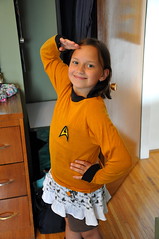
Red shirts were available back then, as well as the blue Mr. Spock style, but I chose Kirk. Of course. - The only sounds I can hear right now: the dishwasher, the fan in the hallway, and the birds in the trees outside the window.
- During my biology degree, Platyhelminthes was a favourite organism name. Now there's a plush toy! (With 2 heads!!)
- When I used to busk with the band, our biggest victories were scaring away the holy rollers across the street (we got applause).
- Neat. When a ship is built, here are the differences between milestones: keel laying, christening, commissioning, etc.
- AutoTune the News #6. Even more awesome.
- Picked up kids from Aldergrove camp. Sadly, there was a terrible accident on the Port Mann Bridge. We took a long Langley/Surrey/New Westminster detour.
- Google's changing culture. Point: Google now has more employees than Microsoft did at launch of Windows 95.
- Time lapse: 8 hours from my front window in about 1 min 30 sec, made with my new Nikon D90 and free Sofortbild capture software (and iMovie):
Something like John Biehler's Nikon Coolpix P6000 is better for timelapse long term; the D90's mechanical shutter, which is rated for 100,000 uses, would wear out in less than 6 months if used for time lapse every day. P.S. Andy Gagliano pointed to a useful Macworld podcast about making time-lapse movies. - Depressing: most Internet Explorer 6 users use it at work, because they're not allowed to use another browser.
- These Christopher Walken impressions are way funnier than I expected.
- The way monkeys peel a banana shows us we've all been doing it the needlessly hard way all these years.
- Um... hot!
- Most appropriate Flash cartoon ever?
- Drinking whisky and Diet Dr. Pepper, watching MythBusters. Pretty mellow.
- A good photo is "not about the details or the subject. It's what your subconscious pulls out of it all without thinking."
- Just picked up another month's supply of horrible, nasty, vile, wonderful, beautiful, lifesaving anti-cancer pills. Thanks, Big Pharma Man.
- My wife tells me she's discovered a sure-fire tip for a gal to attract quality guys in public: carry a huge SLR camera over your shoulder.
- "For the great majority [...] blogging is a social activity, not an aspiration to mass-media stardom."
- Just talked to younger daughter (9) for first time after three days at summer camp. She's a little homesick, but having fun.
- I took a flight over a remote landscape:
- The 50 worst cars of all time (e.g. "The Yugo had the distinct feeling of something assembled at gunpoint").
- I haven't seen either Transformers movie, but that's okay, I saw this.
- Dan Savage: cheating on your spouse should now be known as "hiking the Appalachian Trail." Good point in the article too.
- You can still buy a station wagon with fake wood paneling!
- Train vs. tornado. It does not end well. Watch without fast-forward/scrubbing for maximum tension.
- Just lucked into a parking spot on Granville Island. Time for some lunch.
- Sent the kids off for a week of horse-riding camp today. Wife Air and I had sparkling wine in the garden. Vewwy vewwy quiet around here.
- Just sorted a bunch of CDs. Still several discs missing cases, and cases missing discs. I feel like a total '90s throwback.
- Rules of photography (via Alastair Bird).
- When did the standard Booth Babe uniform become cropped T-shirt and too-short schoolgirl kilt?
- Listening to "Kind of Blue." It's been awhile.
- "A two-year old is kind of like having a blender, but you don't have a top for it." - Jerry Seinfeld (via Ryan).
Labels: audio, biology, blog, cancer, chemotherapy, family, flickr, geekery, google, microsoft, movie, music, oceans, photography, sex, startrek, transportation, video, whistler
05 July 2009
Links of interest 2006-06-28 to 2006-07-04
Once again, while I'm on my blog break, my edited Twitter posts from the past week, newest first:
- Photo of Obama picking up his infamous housefly victim.
- Guess that U2 iPod is never coming back.
- And now: "Ant and Buttercup," my debut HD macro closeup movie from our summer garden:
- My first experiments with off-camera flash during close-up photography:


- If I'm passed at high speed by someone with a Washington plate BOKEH, I now know who it is. He says he'll wave.
- Mammals will play, even between species, even when you'd never expect it—wild polar bear and huskies (slide show via Dave Winer).
- A couple of crows are nesting nearby; they keep landing in our birdbath and on the house and lamp stands, looking ominous. Too smart, crows.
- Sitting in a B.C. garden
No waiting for the sun - CompuServe finally shuts down.
- Just in case you're looking for a $2.1 million convertible.
- Congratulations to Buzz Bishop, Jen, and Zacharie.
- I presume this tiny USB-driven monitor screen is Windows-only, because of drivers? Looks pretty swell. (Via Neal Campbell.)
- Definitive proof I'm not afraid of heights: I love this idea.
- Via John Biehler, I found that as well as MythBuster Adam Savage, his co-workers Grant Imahara and narrator Robert Lee are also on Twitter.
- When I had my first Nikon 25 years ago, I wouldn't have believed I'd ever own one (a D90) with 66 pages of the manual (out of a couple hundred total, in a 16 MB PDF file) just for menu options. Then again, 25 years ago, a friend showed me a shoulder-mounted Betamax camera from Hong Kong, and it was the latest in high tech video too.
- That's the funkiest beat I've ever heard a marching band play (via Jared Spool). Maybe some James Brown next?
- Has anyone pinpointed the exact day that Victoria Beckham stopped being able to smile? Angus Wilson speculates, "whatever day she began to look less like a hot English babe and more like a velociraptor."
- Meg Fowler: "Sarah Palin's quitting politics like Ann Coulter's quitting evil."
- As the 40th anniversary of the first moon landing approaches, some fabulous photos from the missions, via Bad Astronomy.
- From Ben Englert: "Thank you, gdgt, for institutionalizing the arduous task of dick-measuring by figuring out who has more toys."
- Ten best uses of classical music in classic cartoons.
- Our fridge magnet: "I love not camping."
- How did I manage to bite the inside of my upper lip while eating a peach? If this were high school, the guys would say, "Each much?"
- Back to short hair for summer. And now I realize that it's Colbert hair.
- I think my guts have calmed down now. Time for bed. In the meantime, enjoy a naked Air New Zealand flight crew.
- In case you'd like to watch Jeff Goldblum reporting on his own "death," on Colbert Monday: links for Canada and the U.S.A. (sorry if you're elsewhere!).
- Didn't attend various Canada Day parties because of tired family and my usual intestinal side effects. Hope you had fun in my stead. Managed to avoid intestinal chemo side effects for a few days, but they're back with a vengeance. Could be a looooong night. (And it was. At 2 a.m., my chemo side effects were "over" and I went to bed. Bzzt! Wrong! Finally got to sleep at 9 a.m., woke up at 1 the next afternoon. As Alfred E. Neuman says, Yecch.)
- Whatever you think of the 2010 Olympics here in Vancouver, VANOC is doing a good job with graphic design.
- I, too, welcome our new ant overlords.
- I had no alcohol on my birthday yesterday, but still had a Canada Day headache on July 1. Here's my new free instrumental.
- Inside Home Recording #72 is out: Winners, Studio Move, Synth 101, Suckage! AAC enhanced and MP3 audio-only versions.
- Normally I really like our car dealer's service dept, but today the steering wheel came back oh-so-slightly to the left. They had to re-fix it.
- World's geekiest pillows (via Chris Pirillo). My guess: they didn't license the Apple icons. Get the pillows while you can.
- Officially made it to 40. Thanks everybody for the birthday wishes. Most people are bit melancholy to reach 40, but I am extremely glad to have made it.
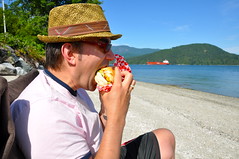
- Just returned from a Deluxe Chuck Wagon burger (with cheese) at the resurrected Wally's Burgers in Cates Park, North Vancouver:
- From Rob Cottingham: "The hell with putting a ring on it. If you liked it, you shoulda made a secure offsite backup."
- Info about recording old vinyl records into a computer: You need a proper grounded phono preamp, with good hot signals into an audio interface or other analog-to-digital converter. A new needle might be wise if yours is old, but the real phono preamp (w/RIAA curve) is the most necessary bit after that. Route it thru an old stereo tuner if needed! See my old post from 2006 at Inside Home Recording.
- Myth confirmed: Baby girl evidence (named Stella) shows MythBusters' Kari Byron actually was pregnant.
- My new Twitter background image is the view we saw at sunset during my birthday party on Saturday. (I've since replaced it again.)
- Back from another fun sunny summer BBQ at Paul Garay's new house—it's been a burgers-n-beer weekend.
- Photos from my 40th birthday party now posted (please use tag "penmachinebirthday" if you post some).
Labels: animals, band, birthday, cartoon, family, food, geekery, insidehomerecording, linksofinterest, moon, movie, music, mythbusters, news, paulgaray, photography, politics, space, transportation, usb